Introduction:
Think about the last time you went to a clinic appointment with a bad back. You probably spent twenty minutes in the car, another ten circling for a parking space, then sat in a plastic chair while a radio played in the corner. By the time your name was called, your back hurt more than when you left the house.
Now picture the alternative. The kettle’s on. You’re in your own clothes, in your own living room. A qualified physio knocks on the door at the time you agreed, sets up in the space you’ve cleared and gets straight to work. When the session’s over, you don’t have a journey home. You just sit down.
That, in a nutshell, is why more people across the UK are choosing physio at home. But the benefits of home physiotherapy go well beyond convenience. In this guide, we’ll walk through the ones that matter most, who gains the most from them and how to decide whether it’s right for you.
What Is Home Physiotherapy?
Home physiotherapy is exactly what it sounds like. A registered physiotherapist comes to your home to assess, treat and support you, rather than you travelling to a clinic or hospital. The treatment itself is the same: hands-on techniques, tailored exercises, advice and a plan for recovery. The difference is the setting, and as you’ll see, the setting changes more than you might expect.
At FlexAura, every physio who offers home visit physiotherapy is HCPC-registered, enhanced DBS-checked and fully insured for home visits, and they bring the equipment they need with them.
The Benefits of Home Physiotherapy
1. No travel, no waiting rooms
Let’s start with the obvious one, because it’s a bigger deal than it sounds. If you’re in pain, recovering from surgery or simply not as steady on your feet as you used to be, getting to a clinic can be the hardest part of the whole appointment. You may need someone to drive you. You may need to take time off work. You may arrive tired, sore and stressed.
At home, none of that applies. Every bit of energy you have goes into the session itself, not into getting there. For many people, that’s the difference between attending regularly and quietly giving up after week two.
2. Treatment that fits your real life
This is the benefit people rarely think about, and it’s one of the most valuable. In a clinic, your physio sees how you move on a treatment couch. At home, they see how you actually live.
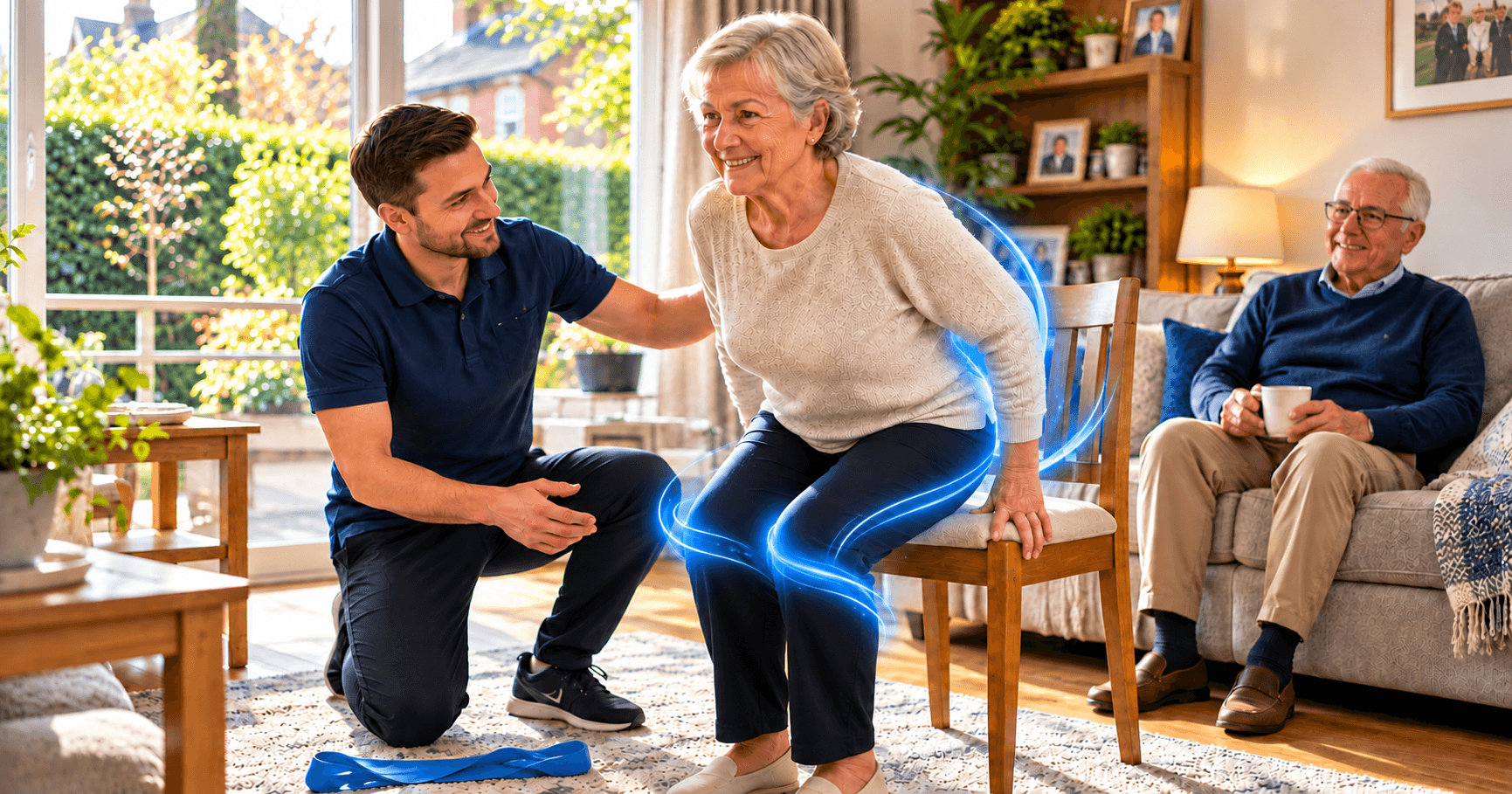
They can watch you climb your own stairs. They can see how you get out of your favourite armchair, how high your bed is and how you manage the step into the shower. They might spot the loose rug in the hallway or suggest moving the kettle so you don’t have to reach so far. That kind of advice is only possible when your physio is standing in your home, and it often makes the biggest difference to day-to-day independence.
3. A calmer, more comfortable setting
Hospitals and clinics can be noisy, busy and a bit intimidating, especially for older patients or anyone living with anxiety, dementia or a neurological condition. Home is familiar. People tend to relax more, ask more questions and feel less self-conscious doing exercises in front of someone.
That matters. When you’re relaxed, you move better, you take in information more easily and you’re more likely to tell your physio what’s really going on.
4. More personal, one-to-one attention
There’s no one waiting outside the door and no queue to get through. Home sessions tend to feel more focused and less rushed. Your physio has time to listen properly, adjust things as you go and make sure you genuinely understand your exercises before they leave.
One patient summed it up in a Google review: the physio “came the same day and was very thorough with assessment and explaining all the exercises.” That thoroughness is easier to deliver when the setting is designed around you.
5. Exercises you’ll actually do
Ask any physio and they’ll tell you the same thing: the work you do between sessions matters more than the session itself. The trouble is, exercise sheets from clinics often get stuck to the fridge and forgotten.
When your physio designs your programme in your own home, they use what you already have. Your kitchen worktop for balance work. The bottom stair for step-ups. A dining chair for sit-to-stands. Because the exercises fit naturally into your space and your routine, you’re far more likely to keep doing them. This is one of the quiet benefits of home physiotherapy that pays off over weeks and months.
6. Safer recovery after surgery or illness
In the first days and weeks after an operation or a hospital stay, travelling can be risky as well as exhausting. Getting in and out of cars, walking across car parks and navigating busy corridors all increase the chance of a fall or setback.
Home treatment means you can start rehab sooner and more safely. If you’ve had a hip or knee replacement, shoulder surgery or spinal surgery, our post-surgery physiotherapy at home service is designed for exactly this stage.
7. Better support for falls prevention
Falls are one of the biggest worries for older adults and their families, and many of them happen at home. The NHS advice on preventing falls highlights strength and balance exercises and making the home environment safer as two of the most effective steps.
This is where the benefits of home physiotherapy really show. A home physio can do both at once. They can assess your balance, build a strength programme and point out hazards in your home that you might never notice. The Chartered Society of Physiotherapy’s Get Up and Go guide to staying steady is a helpful read alongside this.
8. Involving family and carers
When treatment happens at home, the people who support you can be part of it. A daughter can learn how to help her dad practise his walking. A partner can see the right way to assist with stretches. A carer can understand which movements to encourage and which to avoid.
That shared understanding makes a huge difference, particularly after a stroke or for people living with long-term conditions. Everyone pulls in the same direction, and that’s one of the benefits of home physiotherapy that families value most.
9. Flexible appointments that work around you
Many home physios offer early mornings, evenings and weekends, as well as same-day or next-day appointments in many areas. No more squeezing a clinic visit into a lunch break or juggling the school run. For busy working adults and parents, this flexibility is one of the most practical benefits of home physiotherapy, and often what finally makes regular physio possible.
10. Continuity with the same physio
Seeing the same person each time means you don’t have to repeat your story at every appointment. Your physio gets to know you, your goals and how your body responds, and they can spot small changes in your progress. With FlexAura’s 5-session home visit package, you see the same physio every visit, which is ideal for ongoing rehab.
Who Benefits Most From Home Physiotherapy?
Honestly, almost anyone can enjoy the benefits of home physiotherapy. But some people feel the difference more than others:
- Older adults who want to stay steady, strong and independent in their own homes
- People recovering from surgery, especially joint replacements
- Stroke survivors and people living with Parkinson’s, MS or other neurological conditions. Our stroke rehabilitation at home service supports patients and families through every stage.
- Busy professionals and parents who simply can’t fit clinic visits into their week
- People with sports injuries who want fast, focused treatment without the travel. Find out more about sports injury physio at home.
- Anyone with severe pain or limited mobility for whom getting out of the house is a struggle
- Pregnant and postnatal women who’d rather not travel when they’re uncomfortable or juggling a newborn
Is Home Physiotherapy as Effective as Clinic Treatment?
This is a fair question, and the answer is yes for the vast majority of conditions. Physiotherapists bring portable equipment such as resistance bands, exercise tools and, where needed, a treatment table. The core of good physiotherapy has always been a thorough assessment, skilled hands-on treatment and the right exercises, and none of that requires a clinic.
There are a few situations where a clinic or hospital might be more suitable. Hydrotherapy needs a pool, for example, and some specialist rehab uses large gym equipment. Your physio will always be honest with you if another setting would serve you better.
In many cases, the benefits of home physiotherapy actually lead to better results, simply because people attend more consistently and stick to their exercises. A brilliant treatment plan only works if you follow it.
What About the Cost?
Home physio is sometimes assumed to be far more expensive than clinic sessions. In reality, once you factor in travel, parking and time off work, the gap is often smaller than people expect, and for many the time saved is worth it on its own.
At FlexAura, our pricing is simple and published upfront:
- Online consultation: £45 for a 30-minute video call
- First home visit: £110
- Follow-up home visits: £99
- 5-session home visit package: £450, working out at £90 a session
There are no hidden travel fees. Many practitioners also accept private health insurance, including Bupa, AXA and Vitality.
How to Get the Most From Home Physiotherapy
To make the most of the benefits of home physiotherapy, a little preparation goes a long way:
- Clear a space about 2m x 2m so you can move freely
- Wear comfortable clothes that let your physio see the area being treated
- Have your notes ready, including medications, scan results and hospital letters
- Write down your goals. Walking to the shops, getting back to golf, playing on the floor with the grandchildren. Goals help your physio plan.
- Invite a family member to the first session if it helps
- Do your exercises. Little and often beats a big effort once a week.
Our guide on how you recover at home with FlexAura explains what happens from the first visit onwards.
Why Choose FlexAura Home Physio UK?
We built FlexAura to make it easy to find a trustworthy physio who’ll come to you. We have more than 230 physiotherapists across the UK, all of whom have passed our four-step checks: HCPC registration, an enhanced DBS check, insurance that covers home visits and a review of their qualifications and experience.
We cover cities including London, Manchester, Birmingham, Leeds, Bristol, Liverpool, Edinburgh and Glasgow, and many of our physios offer same-day or next-day appointments. We’re rated 5.0 on Google by real patients, and you don’t pay anything upfront for a single session.
Frequently Asked Questions
What are the main benefits of home physiotherapy?
No travel, a more comfortable setting, advice tailored to your real home, more focused one-to-one time, easier involvement of family and carers, and exercises you’re more likely to stick with.
Do I need a GP referral for home physio?
No. You can book a private home physiotherapist directly. If you plan to claim on health insurance, check whether your insurer needs a referral first.
What equipment do I need at home?
Usually nothing. Your physio brings what’s needed. You just need a clear space and comfortable clothing.
How long is a home physio session?
Home visits typically last 45 to 60 minutes, including assessment, treatment and going through your exercises.
Feel the Difference at Home
The benefits of home physiotherapy come down to one simple idea: recovery works best when it fits into your life, not the other way round. Less travel, less stress and more time spent actually getting better.
If you’ve been putting off physio because getting to a clinic feels like too much, this might be the nudge you need.
Book a home physiotherapist today or call 07782 610 633 for a friendly, no-pressure chat.
This article is for general information and isn’t a substitute for personalised medical advice. FlexAura Home Physio UK is a booking platform that connects patients with independent HCPC-registered physiotherapists.
Need Professional Help?
Find a verified, DBS-checked physiotherapist near you and book a home visit or online consultation.
Book Now