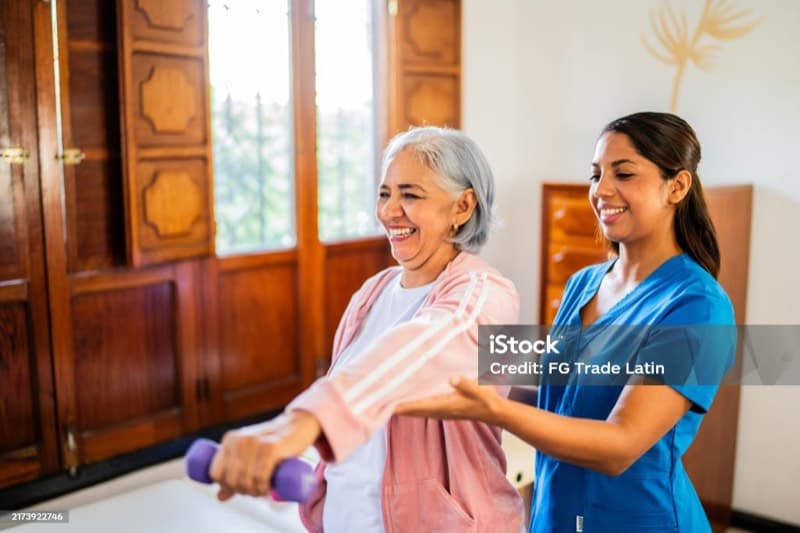
Physio at home: what it really means
Physio at home means a qualified physiotherapist treats you in your own home rather than in a clinic. You'll also see it called home physiotherapy, mobile physiotherapy or home visit physiotherapy. The professional standards are the same. What changes is the setting.
Your physio brings a portable treatment couch and equipment, so there's nothing for you to buy. A clear area of about two metres by two is all you need.
There are two ways to get physio at home with FlexAura:
- In-person home visits. Around an hour, with hands-on assessment and treatment where appropriate. £110 for a first visit, £99 for follow-ups.
- Online video consultations. Thirty minutes from your sofa, for advice and an exercise plan. £45.
Which suits you depends on the problem. If hands-on assessment matters, a home visit is the natural choice. If you mainly need guidance, an online consultation can be a quick way to start.
Online or in person? Choosing how to get physio at home
Choose an in-person home visit if you need hands-on assessment or treatment, you're recovering from surgery, your problem affects how you move, or you'd like someone to see your surroundings.
Choose an online consultation if you mainly want advice and an exercise plan, you'd like a first opinion before committing to visits, or you're comfortable describing and showing your problem on video.
You can start with one and move on to the other. Many people begin online and book a home visit if they'd like hands-on help. Either way, physiotherapy at home starts with the same question: what do you want to be able to do again?
A typical hour of physiotherapy at home
Every visit is different, but many follow a rhythm like this.
- The first ten minutes: talking. Your physio asks what's wrong, when it started, what's changed and what you want to do again.
- The next twenty: looking. They watch how you stand, walk and move, then test strength, flexibility and the sore area. They may look at your chair, bed or workspace.
- The middle: treatment. Where appropriate, hands-on work, movement techniques or guided exercises.
- The last ten: your plan. A written exercise plan, advice on what to do and avoid, and a rough idea of what comes next.
There's time to ask questions, and nobody's watching the clock for the next patient.
Curious how it would work for you? Choose a time online.
Making your home work for your recovery
One real advantage of physiotherapy at home is that your physio can see the places where recovery happens. Here's the kind of thing they might notice.
- The stairs. How you handle them, where a rail would help, and whether resting on a landing makes sense.
- Your chair. A seat that's too low or too soft can make standing harder and aggravate a bad back.
- The bed. How you sleep, and how you get in and out.
- The kitchen and bathroom. Reaching, bending and balancing are where many problems show up.
- Your workspace. If you work from home, your setup may be contributing to neck or back pain.
None of this needs expensive equipment. Often it's small changes, like moving a chair or changing how you get up from the sofa, plus advice on when a mobility aid or occupational therapist could help.
Exercises between visits: where most progress happens
An hour of physiotherapy on its own doesn't finish the job. Most progress comes from what you do in the days in between.
That's why every visit comes with a written exercise plan. Your physio picks exercises to match your problem and your space, and shows you how to do them safely. As you improve, they change the plan.
A few things help:
- Little and often usually beats one big session.
- Fit exercises into your day, for example after the kettle boils or during the adverts.
- Tell your physio what's hard. An exercise that doesn't fit your life won't get done, and they can adjust it.
- Stop and ask if something hurts in a new way. A little discomfort can be normal, but sharp or worsening pain is not something to push through.
Common worries about physiotherapy at home
A few things tend to hold people back before they book, so let's deal with them.
- "My house is cluttered." Your physio needs one clear patch of floor, not a show home. Moving a coffee table is enough.
- "I have no equipment." You don't need any. The physio brings a treatment couch and what they need for the session.
- "I'd feel awkward." Physiotherapists treat people in their homes every day. If you'd like someone with you, that's fine.
- "Is it as good as a clinic?" For many problems it gives the same kind of assessment and treatment. If you'd benefit from a clinic gym or a scan later on, your physio will say so.
- "What about pets and children?" Life carries on around the session. If it helps to shut a dog in another room, do.
If you're searching for physio at home near me because something else is worrying you, message us and ask.
Who is physiotherapy at home for?
Almost anyone, but especially:
- People recovering from surgery who find travelling difficult
- Older adults working on strength, balance and confidence
- People after a stroke or with a long-term neurological condition
- Anyone in pain who finds sitting in a car or on public transport uncomfortable
- Carers and parents who can't easily leave the house
- People with busy diaries who need flexibility
If you're arranging help for a parent or partner, you're welcome to be at the appointment.
What can physiotherapy at home help with?
Back pain and sciatica
See back pain physiotherapy at home and sciatica.
Knee, neck and shoulder pain
Read about knee pain, neck pain and shoulder pain.
Sports injuries
Sprains, strains and overuse problems. See sports injury physiotherapy.
Recovery after surgery
Rehabilitation after joint replacements, ligament repairs and similar procedures. See post-surgery physiotherapy at home.
Stroke rehabilitation
See stroke rehabilitation at home, or our wider guide to neurological physiotherapy.
Mobility, balance and older adults
Read our guide for older adults.
We also treat hip pain, foot and ankle problems, arthritis, falls, Parkinson's, MS and long-term pain. Browse the full conditions list.
Physiotherapy at home for carers and families
Many of the people who look for physio at home aren't the patient. They're a daughter juggling work and a parent's recovery, a husband learning how to help after a stroke, a friend who's become a carer overnight.
If that's you, you can join the visit. Your physio can show you how to help someone stand, walk and use stairs safely, and which exercises to encourage. You can also ask about equipment, how much to help and what to do on a bad day.
Physiotherapy at home works best as a team effort, and the people around you are part of the team.
Private physiotherapy at home: what it costs
Private physiotherapy at home prices vary a lot, and many providers only quote by phone. FlexAura's are shown openly:
| Option | Price |
|---|---|
| Online video consultation (30 minutes) | £45 |
| First home visit (60 minutes) | £110 |
| Follow-up home visit (60 minutes) | £99 |
| Five-visit package | £450 (£90 each) |
Travel and equipment are included, and each visit comes with a written exercise plan. There's no call-out charge and no cancellation fee. If you need to rearrange within 24 hours, message us on WhatsApp. You pay after the visit, by card, bank transfer or cash to your physio. Many private health insurance policies cover physiotherapy from HCPC-registered practitioners, so check yours and keep your invoice, which shows your physio's HCPC number.
See the full pricing page.
Choosing a home physiotherapist near me
If you're searching for a home physiotherapist near me, these checks help.
- Registration. Physiotherapists must be registered with the Health and Care Professions Council (HCPC). You can check any name on the HCPC register.
- DBS check and insurance. Someone coming to your home should have an enhanced DBS check and professional insurance.
- Relevant experience. Ask whether they regularly treat your condition.
- Clear costs. You should see prices before you book.
- An easy way to book. If you can't work out how to book, that's telling.
Every FlexAura physiotherapist is HCPC-registered, DBS-checked and insured, and we verify these before any visit.
Physiotherapy at home near me: where we cover
FlexAura has local pages for eight UK cities:
Looking for physio at home somewhere else, or in a smaller town? Ask us. Availability depends on the area and on which physios are on the platform, and we'll give you a straight answer. Many physios on the platform have same-day or next-day slots, subject to availability.