Looking for physiotherapy near me? Here's what that usually means
People type "physio near me" for different reasons. Some have a pain that appeared last week and won't shift. Some are three days out of hospital and can't face a bus journey. Others have a marathon in eight weeks and a knee that's complaining.
What they share is a wish for a physiotherapist who is close, available and trustworthy. Sometimes "near" means a clinic round the corner. Increasingly it means someone who can come to you, because being close is worth very little if getting there hurts.
That's the gap we work in. When you look for a local physiotherapist through FlexAura, you're choosing from registered professionals who travel to your address, whether that's a city flat or a house on the edge of town. In other words, physiotherapy near me becomes physiotherapy at your door.
You don't need a diagnosis, a referral letter or a perfect description of the problem. If you can say "my shoulder hurts when I reach up", that's enough to begin.
Physiotherapy near me that fits around your life, not the other way round
Good physiotherapy starts with listening. Your physio spends the first part of the visit asking what's going on, what you can't do right now, and what you'd like to get back to. Then they examine how you move and explain what they've found in plain English.
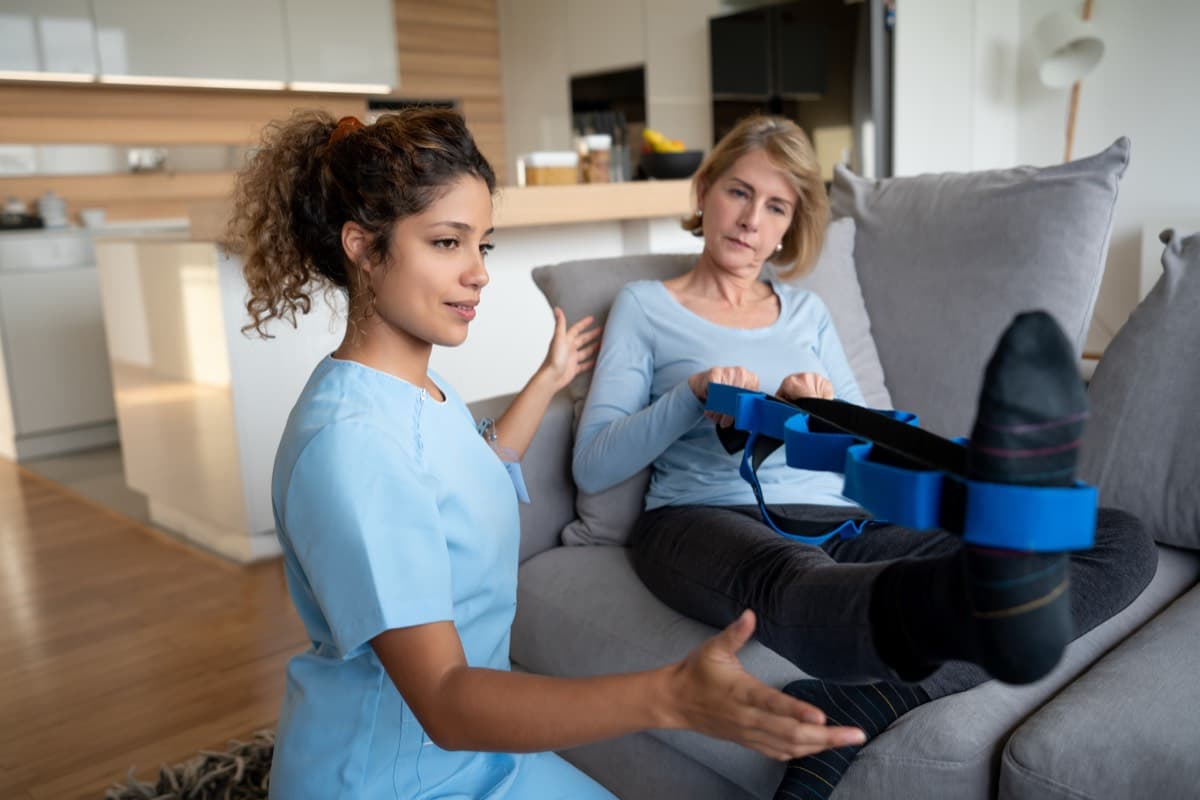
After that comes the plan. It's built around you, not copied from a template: hands-on treatment where it helps, exercises you can realistically do between visits, and honest guidance on what to avoid for now. Every home visit includes a written exercise plan, and the equipment comes with your physio.
Visits last around an hour, so nobody is watching the clock while you're still describing the problem. That's what physiotherapy near me should feel like: unhurried, clear and built around you.
Because you're in your own home, the advice can be practical. Your physio can see the stairs you struggle with, the chair you sit in all day, the bed you're trying to get out of. That detail tends to make exercises stick.
Prefer to start with a look at the numbers? See the prices and what's included, then decide.
What can a physiotherapist help with?
Physiotherapy near me isn't only for sore backs. Here are the areas people book most, and how to tell whether an assessment might be worth it.
Back pain and sciatica
Lower back pain is one of the most common reasons people seek physio. Treatment often combines hands-on work, movement advice and strengthening exercises. Consider an assessment if pain keeps returning, limits sitting or sleeping, or sends a nagging ache down your leg. Read more about back pain physiotherapy at home and sciatica.
Knee pain
Knees take a lot of daily load. Physio can help with stiffness, swelling after an injury, or the ache that arrives on stairs. It's worth booking if a knee gives way, feels stiff every morning, or is slowing your walking. See our knee pain page.
Neck and shoulder pain
Long hours at a desk, an awkward night's sleep or an old injury can leave your neck tight and your shoulder unwilling to lift. An assessment is sensible if pain spreads into your arm, headaches keep coming back, or you can't reach overhead comfortably. Details: neck pain and shoulder pain.
Sports injuries
Sprains, strains and overuse problems respond well to a sensible return-to-activity plan. A physio can help you work out what's safe to do now and how to build back up. Take a look at sports injury physiotherapy.
Recovery after surgery
After a joint replacement, ligament repair or spinal procedure, rehabilitation is a big part of getting your movement back. Your physio works alongside your surgeon's instructions, never against them. Learn about post-surgery physiotherapy at home.
Stroke and neurological rehabilitation
Regaining strength, balance and confidence after a stroke takes time and repetition. Rehabilitation at home lets practice happen where daily life happens. See stroke rehabilitation at home and our guide to neurological physiotherapy, which also covers Parkinson's and multiple sclerosis.
Mobility, balance and older adults
Struggling with stairs, feeling unsteady or losing confidence after a fall are all things physiotherapy can address. Our guide to home physiotherapy for older adults explains what a visit looks like for a parent or relative.
We also list hip pain, foot and ankle problems, arthritis and long-term pain among the areas our physios support. You can see the full conditions list.
Booking physiotherapy near me for the first time? Book an assessment and let the physio work it out with you.
Physiotherapy at home near me: how it works
Home visit physiotherapy simply means the appointment happens in your living room rather than a treatment room. Your physio brings a treatment couch and equipment, and all you need is a clear patch of floor around two metres by two.
For many people, the appeal of home physiotherapy near me is practical. You skip the travel, the queue and the time off work. If you're recovering from surgery, caring for someone, or living with pain that makes sitting in a car miserable, that matters a great deal.
Treatment also happens in the place you'll be practising. Physios can suggest small changes around the house and show you exercises using your own furniture.
To be fair, home visits aren't automatically better than clinic care. They're a convenient way of getting the same kind of assessment and treatment, and for some people the only realistic one.
A 30-minute online video consultation for £45 is also available for advice and an exercise plan.
Ready for physiotherapy at home near you? Arrange a home visit in a few minutes.
Choosing a private physiotherapist near me: what to check
Searching for private physiotherapy near me throws up plenty of choice. Whichever physiotherapist you consider, a few quick checks make it easier to pick well.
- Registration. In the UK, physiotherapists must be registered with the Health and Care Professions Council (HCPC). You can check any registration on the HCPC register. Chartered Society of Physiotherapy membership is another common sign of professional standing, though it's optional.
- Experience with your problem. Ask whether they regularly treat what you're dealing with, whether that's a frozen shoulder or life after a stroke.
- A clear plan. You should leave the first session knowing what's wrong, what happens next and roughly how long it may take.
- Honest pricing. Look for the full cost before you book, including travel and any cancellation charges.
- Straightforward booking. If you can't tell how to book or who to speak to, that's a warning sign.
At FlexAura, every physiotherapist is HCPC-registered, holds an enhanced DBS check and carries professional insurance, and we verify those details before anyone visits a patient. Prices are shown up front: £110 for a first home visit, £99 for follow-ups, or £450 for a five-visit package, which works out at £90 a visit. Travel is included, there's no call-out charge and no cancellation fee, and you pay after your visit rather than before.
If you use private health insurance, many policies cover physiotherapy from HCPC-registered practitioners. Each invoice shows your physio's HCPC number and the treatment provided, which is what insurers usually ask for. Check your own policy first, as cover differs.
What happens at your first physiotherapy appointment?
If you've never used physiotherapy before, here's what to expect. Nothing about it should feel strange.
The opening conversation
You'll talk through what's bothering you, when it started, what makes it better or worse, and any medical history that might matter.
The assessment
Your physio watches how you move and gently tests strength, flexibility and the area that hurts. Wear something comfortable that lets you move freely.
Your goals
Your physio asks what you want to get back to. Walking the dog, lifting a grandchild and playing five-a-side are all sensible goals, and they shape the plan.
The treatment plan
You'll hear what they think is going on, in language you can follow, along with the options and a rough idea of how many visits might be needed.
Exercises and advice
You'll get a written exercise plan to follow between visits, plus practical advice on activity, posture or pacing.
Follow-up care
Later visits check progress, adjust exercises and move you towards independence. Your physio will tell you honestly when you no longer need to keep coming.
Not sure what type of physiotherapy you need?
Physiotherapy near me doesn't require a neat diagnosis. Most people arrive with a pain, an injury, a scar, a wobble on the stairs or a worry about getting older. That's fine.
Physiotherapists are trained to work out the cause and point you to the right kind of help. Whether your situation is a sudden injury, a long-running ache, recovery from an operation, trouble getting about, a return to sport or neurological rehabilitation, a first assessment is usually the quickest way to find out.
Want to talk it through? Contact FlexAura and we'll help you choose.
Where to find physiotherapy near me across the UK
FlexAura has local pages for eight UK cities:
Living somewhere else? Ask about physiotherapy near you anyway. Availability varies by area and by which physios are on the platform, and we'd rather tell you straight than guess.
Why people book physiotherapy near me with FlexAura
- Registered and checked. Every physio is HCPC-registered, enhanced DBS checked and insured.
- Simple pricing. From £45 online and £110 for a first home visit, with no call-out or cancellation fees.
- Pay afterwards. You book without card details and pay after the visit.
- Written plan. You leave with a written exercise plan, and an insurer-ready invoice if you need one.
- Online booking. Pick a slot yourself, or use WhatsApp or phone if you prefer.