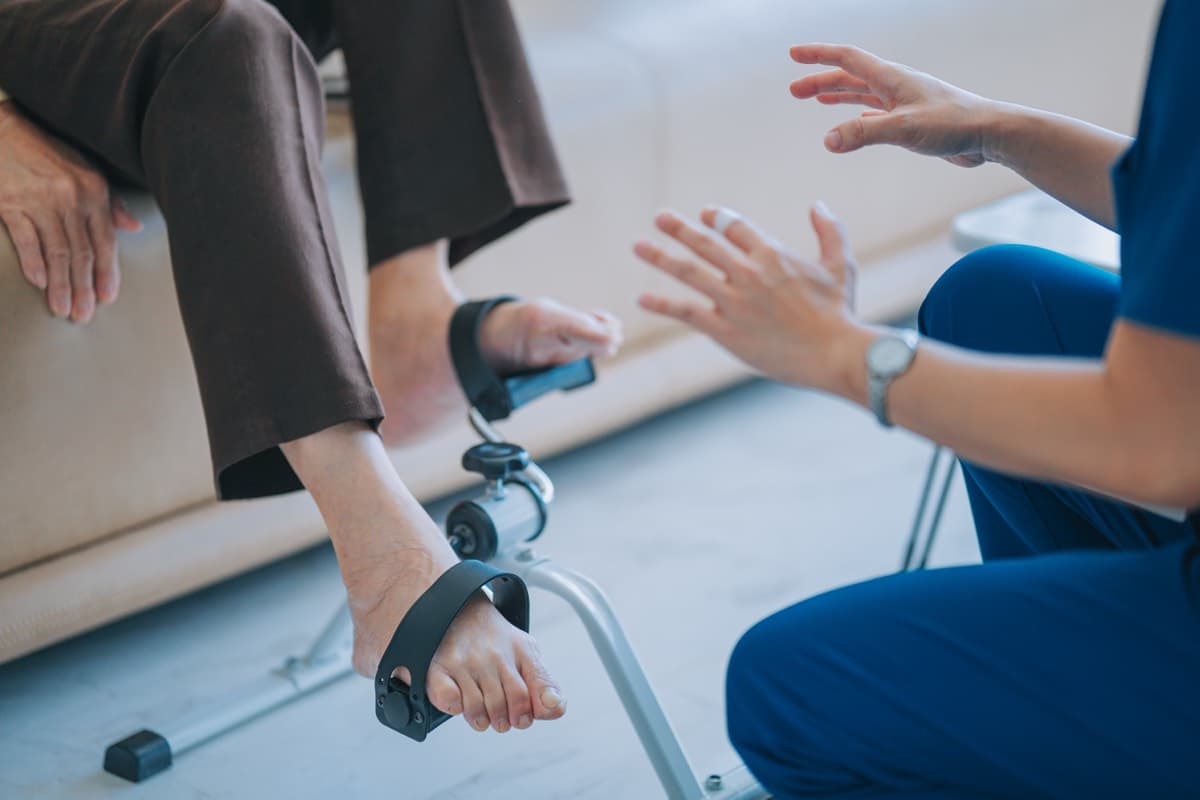
What is neurological physiotherapy?
Neurological physiotherapy helps people whose movement has been affected by a condition of the brain, spinal cord or nerves. A neuro physio looks at how you walk, balance, reach, transfer from bed to chair and manage everyday tasks, and works out what's getting in the way.
FlexAura's neurological physiotherapy specialisation covers:
- Stroke rehabilitation
- Parkinson's disease
- Multiple sclerosis (MS)
- Spinal cord injuries
- Brain injuries
If your condition isn't on that list, ask anyway. Neurological conditions vary a great deal, and it's better to talk to us than to guess.
The brain and nervous system can adapt, especially with regular, well-directed practice. That's why neuro physio tends to involve repetition, goal-setting and exercises you keep doing between visits. Your physio can't promise a particular outcome, and recovery looks different for everyone, but the right practice can make a real difference to what you can do.
Neurological physiotherapy at home: why it can help
Neuro physiotherapy at home puts practice in the setting that matters. Your physio can see the stairs you find difficult, the bathroom you can't get into easily, the chair that's too low, and the route from bedroom to kitchen. Advice and exercises are built around that.
It also takes away a big obstacle. After a stroke or during a flare of a long-term condition, travelling to a clinic can be tiring, stressful or simply not possible. Fatigue is real, and saving energy for the exercises rather than the journey counts for a lot.
Families and carers can be involved. Your physio can show a partner or relative how to help safely with transfers, walking or exercises, and answer their questions on the spot.
To be balanced, home visits aren't automatically better than clinic-based rehab for everyone. Some people need equipment or group sessions that a home visit can't offer, and your physio will tell you if that's the case.
Want to see what's possible? Book a home visit and tell us about your situation.
Neuro physio for different conditions
Every person is different, and so is every neurological condition. Here's how physiotherapy typically approaches each area we cover.
Stroke rehabilitation
Rehabilitation after a stroke often focuses on rebuilding strength, balance, walking and arm and hand use, and on regaining confidence. Practising in your own home helps skills carry over into daily life. Read more about stroke rehabilitation at home.
Parkinson's disease
Physiotherapy can help with movement, posture, balance, walking and staying active. Exercises and strategies are adjusted as your needs change over time.
Multiple sclerosis
MS symptoms can fluctuate, and fatigue plays a large part. Your physio can help you plan exercises around your energy, work on strength and balance, and adapt as things change.
Spinal cord injury
Physiotherapy focuses on strength, movement, positioning and function based on your level of injury and goals.
Brain injury
Rehabilitation addresses movement, balance, coordination and everyday activities. Progress can be gradual, and your plan will reflect that.
Balance, falls and mobility
Unsteadiness and a fear of falling can limit what you do. Neuro physio can work on balance, walking and confidence. Our guide to home physiotherapy for older adults explains more.
You can also see the full conditions list.
What happens at your first neuro physio appointment?
If you've never had neurological physiotherapy, this is how the first visit usually goes.
A conversation about you
Your physio asks about your condition, how it's changed, your medication and any therapy you've had. Bring reports or discharge letters if you have them, but don't worry if you don't.
An assessment of how you move
Your physio watches how you sit, stand, walk, balance and use your arms and hands, and looks at how you manage around the house. They may ask you to try a few simple tasks.
Your goals
What matters most to you? Walking to the shop, making a cup of tea, playing with grandchildren. Your goals shape the plan, and they should be your goals, not a generic list.
A plan you understand
You'll hear what your physio has found and what they suggest, in plain language. Family members and carers are welcome to join in.
Exercises and support
You'll get a written exercise plan to follow between visits, plus practical advice on safety, pacing and equipment.
Follow-up
Later visits review your progress and adjust the plan. If you need other professionals, such as an occupational therapist or your GP, your physio will tell you.
How to choose a neuro physiotherapist near me
If you're looking for a neuro physiotherapist near me, a few checks help you choose well.
- Registration. Physiotherapists must be registered with the Health and Care Professions Council (HCPC), and you can check any name on the HCPC register. Chartered Society of Physiotherapy membership is another sign of professional standing.
- Neurological experience. Ask how often they treat your condition. Some physios also belong to the Association of Chartered Physiotherapists in Neurology (ACPIN), which is one way to spot a neuro focus, though it isn't a legal requirement.
- Home visits. Ask whether treatment can be at home, as the Stroke Association suggests when choosing a private therapist.
- A clear plan and clear costs. You should know what's proposed and what it costs before you commit.
- Communication. Look for someone who explains things simply, involves your family if you'd like and answers questions.
At FlexAura, every physiotherapist is HCPC-registered, enhanced DBS checked and insured, and we verify those details before anyone visits a patient. When you book, tell us about the condition, so we can match you sensibly with someone who works in neurological rehab.
Supporting someone you care about
Many of the people who contact us about neuro physio aren't the ones with the condition. They're a daughter, a husband, a friend who has become a carer overnight, and they're trying to work out what's safe and what helps.
If that's you, you're welcome at the appointment. Your physio can show you how to help someone stand, walk or transfer without hurting either of you, and explain which exercises to encourage and which to leave alone. You can ask about equipment, how much support is too much, and what to do on a bad day.
You don't need medical knowledge to book. A short description of what's happened, and what you're hoping for, is a good place to start. You can also send us a message if you'd like to talk before booking.
What does neuro physio cost, and how do I pay?
FlexAura's prices are shown openly:
| Option | Price |
|---|---|
| Online video consultation (30 minutes) | £45 |
| First home visit (60 minutes) | £110 |
| Follow-up home visit (60 minutes) | £99 |
| Five-visit package | £450 (£90 each) |
Travel and equipment are included, and each visit comes with a written exercise plan. There's no call-out charge and no cancellation fee. If you need to rearrange within 24 hours, message us on WhatsApp. You pay after the visit, by card, bank transfer or cash to your physio. Many private health insurance policies cover physiotherapy from HCPC-registered practitioners, so check yours and keep your invoice, which shows your physio's HCPC number.
Neurological rehabilitation often benefits from regular sessions, so the five-visit package can be worth considering. See the pricing page.
Urgent symptoms: call 999
Where you can find neurological physiotherapy near me
FlexAura has local pages for eight UK cities:
Living elsewhere? Ask us about neuro physio near you. Availability depends on the area and on which physios are on the platform, and we'll give you a straight answer.