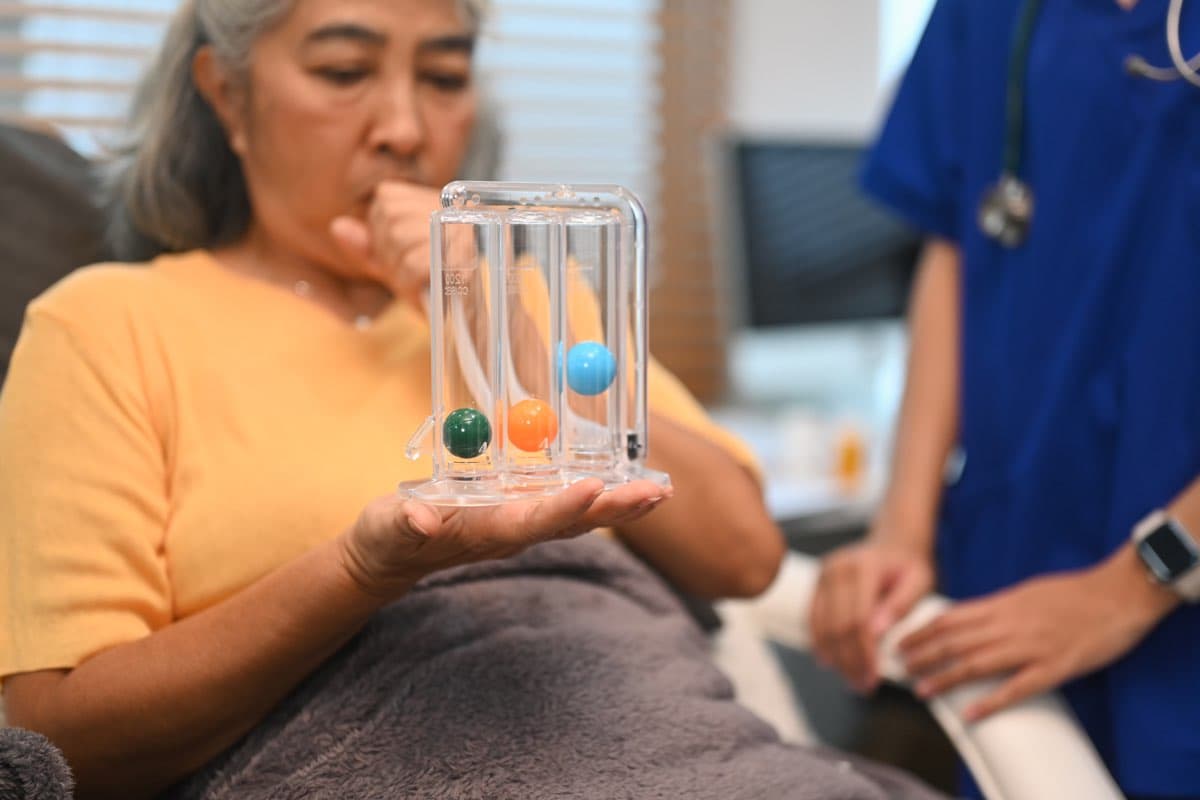
In short: what chest physiotherapy at home for COPD involves
Chest physiotherapy at home for COPD means a physiotherapist visits you in your own living room to assess your breathing, teach you techniques that help clear mucus, and build a safe routine you can follow between visits. It is general physiotherapy practice, tailored to you, and it sits alongside the care from your GP or respiratory team rather than replacing it.
FlexAura's HCPC-registered, DBS-checked, insured physiotherapists visit patients at home anywhere in the UK, and online video consultations are also available. You can book at our booking page, and you pay after the visit. This guide explains what to expect, so you can decide whether it suits you or someone you care for.
What chest physiotherapy means for people with COPD
Chronic obstructive pulmonary disease (COPD) is a long-term lung condition that makes breathing harder, often with a persistent cough and mucus. The NHS COPD overview describes the condition and its usual symptoms in plain language, and is a good starting point if you are newly diagnosed.
Chest physiotherapy is a group of hands-on and teaching-based approaches focused on the lungs and breathing. For COPD, a physiotherapist may look at how you breathe, how well you clear secretions, how much activity you can manage, and where breathing feels hardest. The aim is to make everyday breathing and movement feel more manageable, not to promise a particular result.
Why have it at home rather than in a clinic?
Many people with COPD find travel tiring, and waiting rooms or car journeys can use up energy that would be better spent on the session itself. At home, you stay in a familiar place, with your own chair, stairs and kitchen, so the physiotherapist can see the real situations that leave you short of breath.
- No travelling, parking or waiting before a session starts.
- Advice fitted to your actual home, such as the stairs, the bathroom and where you sit.
- A family member or carer can sit in and learn the techniques with you.
- Your usual equipment, such as an inhaler or spacer, is to hand for the physiotherapist to review with you.
Our overview of physiotherapy at home explains how the wider service works across the UK.
What happens during a home visit
A first visit begins with a conversation. Your physiotherapist asks about your diagnosis, symptoms, medicines, recent chest infections, daily routine and what you want to be able to do more comfortably. They will also ask about anything that worries you, so they can tailor the session around it.
- Assessment: a look at your breathing pattern, posture, cough and how you cope with simple movements.
- Teaching: practical breathing and airway-clearance techniques, shown step by step so you can repeat them yourself.
- Movement and pacing: advice on staying active in a way that suits your breathlessness.
- A written plan: a short routine to follow between visits, adjusted at follow-up appointments.
Our guide to home visit physiotherapy covers what the physiotherapist brings and how appointments are arranged.
Techniques your physiotherapist may use
The techniques chosen depend on your symptoms and what is safe for you, so the list below is a general picture rather than a prescription. Your physiotherapist decides what is appropriate after assessing you, and may change the approach as your needs change.
Breathing control and positions
Relaxed, controlled breathing can help when you feel breathless or anxious. Your physiotherapist may teach you comfortable positions for resting and recovering your breath, as well as breathing methods such as pursed-lip breathing, practised until they feel natural.
Airway clearance
If mucus is a problem, you may be shown a structured sequence of breathing exercises and gentle huffing to help move secretions so they are easier to cough up. Hands-on techniques are used only when suitable, and you stay in control of the pace throughout.
Exercise and pacing
Staying active matters in COPD, but how you do it matters too. Expect advice on pacing daily tasks, planning rest breaks, and building up gentle exercise gradually so it stays within your comfort.
UK Physio Tip: Write down your usual symptoms before the first visit, along with the times of day breathing feels hardest. Keep your inhalers and any action plan from your GP or respiratory nurse nearby, so your physiotherapist can work with what you already use.
Is it right for you? When to speak to your GP first
Home chest physiotherapy suits many adults living with COPD, but it works best alongside medical care. If your symptoms have recently changed, you have a new fever, you are coughing up discoloured mucus, or you have not had your condition reviewed lately, speak to your GP or respiratory team first. They can check whether something else needs treating.
Call 999 or seek urgent help for chest pain, sudden or severe worsening of breathlessness, sudden weakness or numbness, or a suspected stroke. Do not wait for a physiotherapy appointment if you feel acutely unwell. Home physiotherapy is for ongoing support, not emergencies.
This platform facilitates booking only. It does not provide medical advice.
How much does it cost?
Our prices are simple and shown in full on the pricing page. You pay after the visit, and there are no cancellation fees.
- Online consultation: £45
- Home visit: £110 for the first visit, £99 for a follow-up
- 5-session home package: £450
An online consultation can be a useful first step if you would like to talk through your symptoms and goals before arranging a home visit. Your physiotherapist can then advise on how many visits are sensible for you.
Preparing for your first visit
A little preparation helps you get the most from the session. Choose a room where you are comfortable and have space to sit and move about, and have a drink nearby. Let the physiotherapist know about any other conditions, since these can affect which techniques are suitable.
- A list of your medicines, including inhalers and any oxygen use.
- Any recent letters or results from your GP or hospital team.
- Comfortable clothing you can breathe easily in.
- A family member or carer, if you would like them involved.
Frequently asked questions
Can a physiotherapist treat COPD at home?
A physiotherapist can assess your breathing, teach airway-clearance and breathing-control techniques, and advise on pacing and gentle exercise at home. They work alongside your GP or respiratory team, and do not replace medical care or medicines.
Do I need a referral to book?
You can book directly through our website, by phone on 07782 610 633, or by WhatsApp. It is still sensible to tell your GP or respiratory team that you are having physiotherapy, so everyone involved in your care is aware.
Are your physiotherapists qualified?
Yes. Our physiotherapists are HCPC-registered, DBS-checked and insured. You can read more about the regulator on the NHS and HCPC websites, and our team will explain who is visiting before your appointment.
Can a carer or family member join the session?
Yes, and many people find it helpful. A relative or carer who sees the techniques being taught can help you practise safely between visits and remind you of the routine on harder days.
Can I book an online consultation instead?
Yes. Online video consultations are available at £45 and suit people who want to discuss symptoms, breathing positions and pacing from home. A home visit lets the physiotherapist see your surroundings and work with you in person.
Book chest physiotherapy at home
If you or someone close to you lives with COPD and would like practical breathing support at home, we can help you find the right physiotherapist. Rated 5.0 on Google, FlexAura makes booking straightforward, and you can read more about the conditions we support before you decide. Book a Physiotherapist, call 07782 610 633, or WhatsApp us.
Need Professional Help?
Find a verified, DBS-checked physiotherapist near you and book a home visit or online consultation.
Book Now