In short
Parkinsons physiotherapy at home means a HCPC-registered, DBS-checked physiotherapist comes to your living room, assesses how you move, and builds a programme around your own stairs, chairs and routines. It focuses on walking, balance, posture, transfers and keeping active. Online video consultations are also available. This page explains what a visit involves and what to prepare.
Why physiotherapy matters in Parkinson's
Parkinson's affects movement in ways that can change from one person to the next, and from one day to the next. Stiffness, slowness, a shuffling walk, a stooped posture and difficulty turning over in bed are all things a physiotherapist looks at. Physiotherapy is recognised in NHS and NICE guidance as part of the care for people with the condition.
The aim of physiotherapy is practical: to help you keep moving, stay safe and keep doing the things that matter to you. It does not replace your neurologist, Parkinson's nurse or GP, and it works alongside the medication they manage. A physiotherapist cannot change your treatment, but can tell your care team what they see in everyday movement.
What a physiotherapist looks at
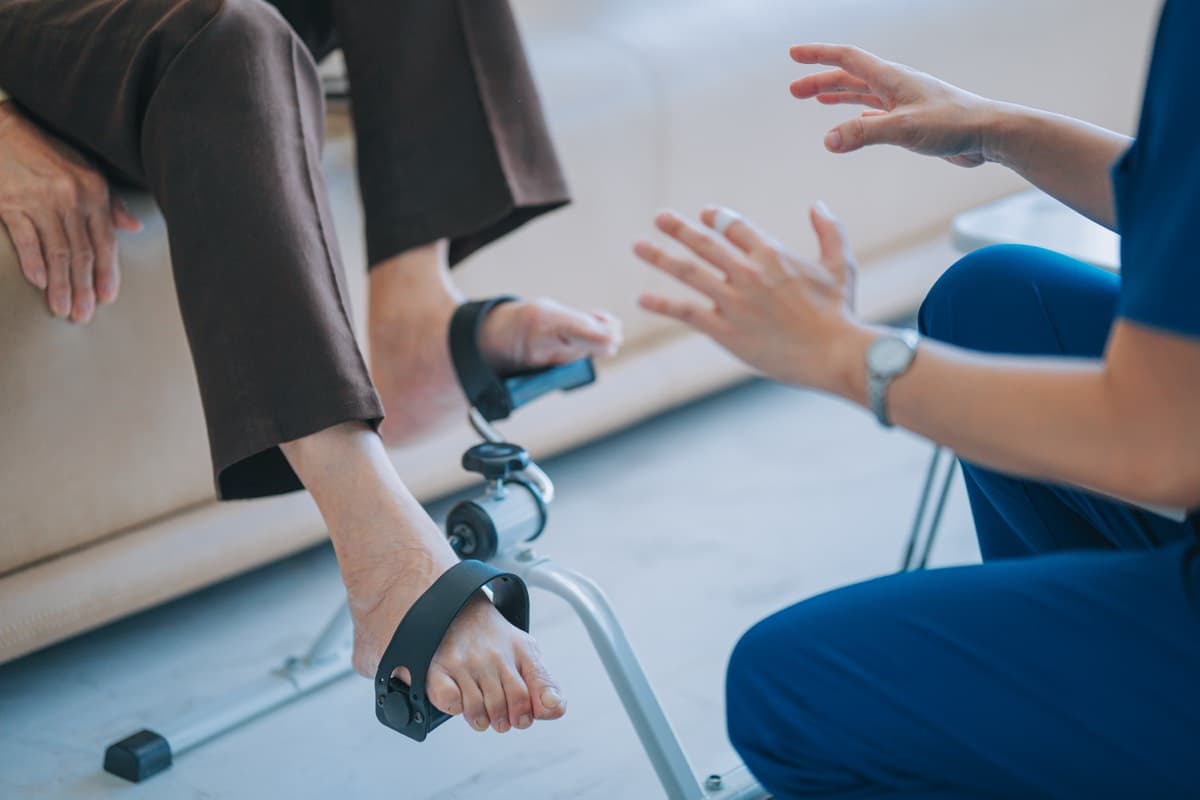
At the first visit, your physiotherapist listens to your story before asking you to move. They want to know what has become harder, what worries you and what you would like to keep doing. Then they watch you move in your own space, because that is where the real difficulties show up.
- How you stand up from a chair, the sofa or the bed
- Your walking pattern, step length and how you turn
- Balance, including reaching, bending and stepping over thresholds
- Posture, stiffness and range of movement in the neck, back and limbs
- Hand and arm movement for everyday tasks
- Any falls, near-falls or fear of falling
From this, they agree a small number of clear goals with you. Goals work best when they are personal, such as getting in and out of the car more easily or walking to the end of the road with more confidence.
What treatment can include
Treatment is built around you rather than a standard sheet of exercises. Common elements of Parkinson's physiotherapy include strength and mobility work, balance practice, walking and turning practice, and strategies for starting and keeping movement going. Your physiotherapist can teach cueing techniques, which use rhythm, counting or visual targets to help movement feel less stuck.
Because the session happens at home, practice is directly relevant. You can rehearse getting off your own sofa, climbing your own staircase or moving around your own kitchen. Your physiotherapist can also suggest simple changes to the layout of a room, and explain when it may be worth speaking to your GP about further assessments or equipment.
UK Physio Tip: Keep a short note of the movements that were hardest each day, and how you felt around the time you took your medication. Showing this to your physiotherapist helps them plan exercises for the times you move best, and gives your care team useful detail.
Why home visits can suit Parkinson's
Travelling to a clinic can be tiring, and for some people it is stressful or unsafe. A home visit removes the journey, the waiting room and the transfers in and out of the car. You are seen in familiar surroundings, which many people find easier, and a partner or carer can take part in the session if you wish.
Home also gives the physiotherapist a true picture of risk. They can see rugs, narrow doorways, bathroom steps and lighting, and advise on practical changes. Our home visit physiotherapy service covers the whole UK, and our neurological physiotherapy page explains how we work with long-term neurological conditions.
Safety, falls and staying active
Balance and falls are a common concern. Your physiotherapist will talk with you about what makes you feel unsteady, and agree exercises you can do safely, with support nearby where needed. If you are older or live with other health conditions as well, our guide to physiotherapy for elderly people at home gives more background.
Exercise tends to work best when it is regular and enjoyable, so your programme should fit your day. Short, frequent sessions are often easier than one long one. Your physiotherapist will review the plan at each visit and change it as your needs change. Progress varies by person, and no outcome can be promised.
When to seek urgent help
Physiotherapy is not an emergency service. Call 999 or see a GP urgently for chest pain, sudden weakness or numbness, loss of bladder or bowel control, or a suspected stroke. Speak to your GP or Parkinson's team promptly if you have a fall that causes injury, sudden confusion, or a marked and unexplained change in your symptoms.
This platform facilitates booking only. It does not provide medical advice. For more on the condition, see the NHS Parkinson's disease overview.
Cost and how booking works
A home visit costs £110 for the first visit and £99 for each follow-up. An online video consultation costs £45, and a 5-session home package costs £450. Patients pay after the visit, and there are no cancellation fees. You can see everything on our pricing page.
To arrange a visit, use our booking page, call 07782 610 633 or message us on WhatsApp. Appointments are offered subject to availability, so it helps to say what you would like to work on. FlexAura is rated 5.0 on Google.
Parkinsons physiotherapy at home: common questions
Can physiotherapy at home help with Parkinson's?
Physiotherapy can help you work on walking, balance, posture and everyday movement, and a home setting makes the practice specific to your surroundings. Results vary by person, and no outcome can be promised. Your physiotherapist works alongside your medical team.
Do I need a GP referral for a private physiotherapist?
You can book a private physiotherapist directly. It is still sensible to tell your GP or Parkinson's team that you are having physiotherapy, so everyone involved in your care is aware.
Can a family member or carer join the session?
Yes. Many people find it helpful for a partner or carer to be present, so they can learn the exercises and cueing techniques and help with practice between visits.
Is an online consultation an option?
Yes. Online video consultations are available and can suit follow-up reviews or exercise checks. Your physiotherapist will tell you if they think an in-person visit would be more useful.
What should I prepare for the first visit?
Have a list of your medicines and the times you take them, a note of any falls, and comfortable clothing and shoes. Make sure there is clear space to walk, and a sturdy chair nearby.
Book Parkinsons physiotherapy at home
If you or someone you care for would like movement support at home, we can help. Book a Physiotherapist online, or call 07782 610 633 to talk it through first.
Need Professional Help?
Find a verified, DBS-checked physiotherapist near you and book a home visit or online consultation.
Book Now