In short
Hip bursitis is irritation of a small fluid-filled sac, called a bursa, on the outside of the hip. It usually causes pain over the bony point at the side of the hip, and that pain is often worse when you lie on that side, climb stairs or stand up from a chair. Most people manage it with activity changes, simple pain relief and a structured exercise plan from a physiotherapist. FlexAura's HCPC-registered, DBS-checked physiotherapists can assess and treat hip bursitis at home anywhere in the UK, or by online video consultation.
What is hip bursitis?
A bursa is a thin cushion that lets tendons and muscles glide over bone without friction. The one most often involved in hip bursitis sits over the greater trochanter, the bony bump you can feel at the side of your upper thigh. When it becomes irritated it is called trochanteric bursitis. Clinicians increasingly group it with nearby tendon problems under the name greater trochanteric pain syndrome, because the bursa and the gluteal tendons above it are often irritated together.
That overlap matters for treatment. If side-of-hip pain is mainly coming from the tendons, our guide to gluteal tendinopathy and hip pain at night explains that condition in detail. This article focuses on the bursa itself: what irritates it, what helps it settle and what a physiotherapist does at an assessment.
Hip bursitis symptoms to look out for
Symptoms vary from person to person, but trochanteric bursitis commonly causes:
- Pain and tenderness over the outside of the hip, sometimes spreading down the outer thigh
- Pain when lying on the affected side, which can disturb sleep
- Pain when getting up from a low chair, climbing stairs or walking uphill
- Discomfort after sitting with your legs crossed or standing on one leg for a long time
- Stiffness or aching when you first move after resting
Hip bursitis does not usually cause deep groin pain, pins and needles down the leg or a hip that locks or gives way. Those symptoms point to other causes, such as a problem inside the hip joint or in the lower back, which is one reason a proper assessment is worth having rather than guessing.
What causes bursitis in the hip?
The bursa usually becomes irritated through repeated pressure or friction rather than a single injury. Common contributing factors include:
- A sudden increase in walking, running or stair climbing
- Long periods lying on one side on a firm surface
- Weakness in the gluteal muscles that control the hip and pelvis
- Standing with your weight shifted onto one hip, or sitting with your knees crossed
- A fall or knock onto the side of the hip
- Differences in walking pattern after a back, knee or hip problem
Less often, a bursa becomes infected. The NHS guidance on bursitis advises getting medical help urgently if the area is hot, red and swollen and you have a high temperature or feel hot and shivery. An infected bursa needs a doctor, not physiotherapy.
How do you treat hip bursitis?
Treatment aims to calm the irritated bursa, reduce the load that keeps aggravating it and build the strength and control that protect the hip over time. Your GP or physiotherapist will tailor the plan to you, and how quickly symptoms settle varies by person.
Self-care in the early stages
- Ease off the activities that clearly provoke the pain for a while, without stopping moving altogether
- Avoid lying on the painful side; a pillow between your knees can help when lying on the other side
- Choose higher chairs and avoid crossing your legs
- Use an ice pack wrapped in a towel over the area for short periods if it helps
- Ask a pharmacist about suitable over-the-counter pain relief
What a GP may offer
If pain persists despite self-care, a GP can review the diagnosis and discuss further options. These can include a referral for physiotherapy and, in some cases, a steroid injection. Injections are a medical decision made with your doctor, so any physiotherapist you see should work alongside that advice rather than instead of it.
How physiotherapy helps hip bursitis
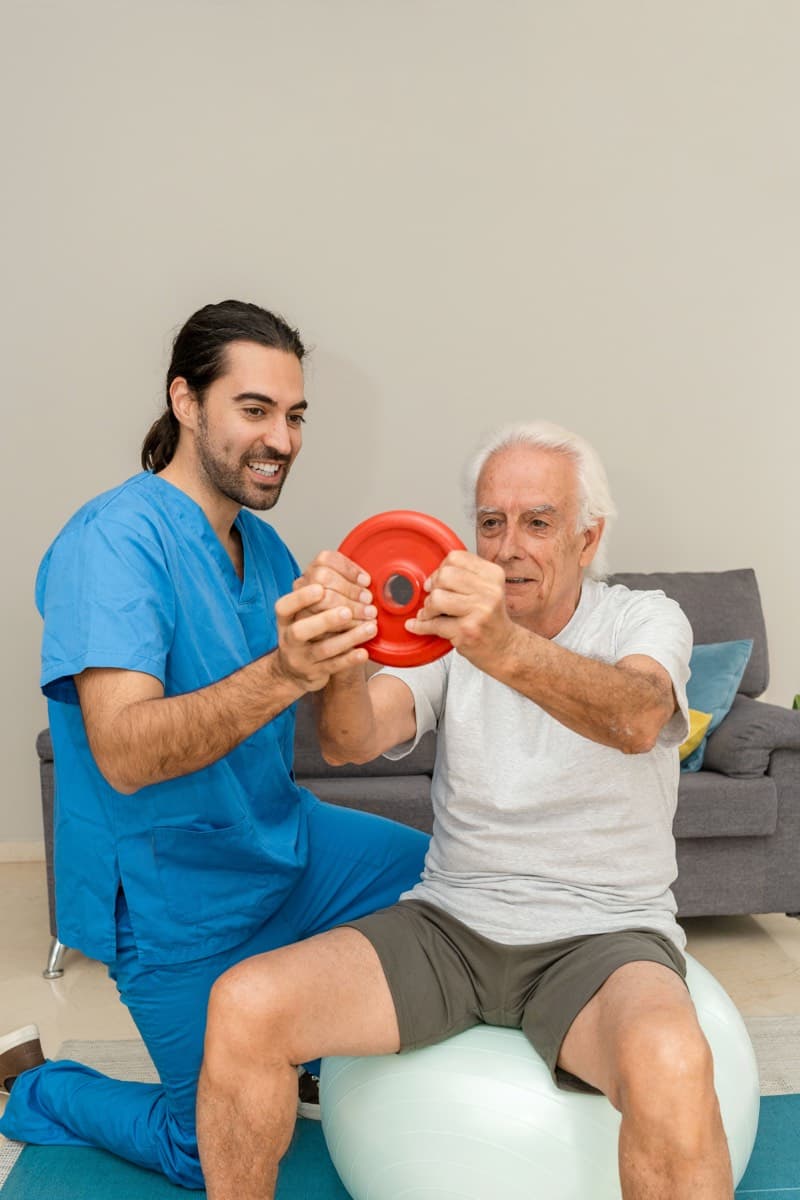
Physiotherapy for hip bursitis is mostly about load management and exercise. Your physiotherapist will explain which positions compress the bursa, help you adjust daily habits such as sleeping position and sitting posture, and give you a graded exercise programme. Early exercises are usually gentle and pain-aware, then progress to strengthening the gluteal muscles so the hip and pelvis stay steadier when you walk, climb stairs and stand on one leg.
Some exercises commonly found online, such as deep stretches across the outer hip, can press on an irritated bursa and make it worse. That is why a personalised plan matters more than a generic list. Your physiotherapist may also look at your walking pattern, footwear and activity levels, and suggest a sensible way to build back up to the walks, sport or daily tasks you want to return to.
UK Physio Tip: If side-lying wakes you at night, try sleeping on your back or on the other side with a pillow between your knees. Keeping the top knee level with the hip stops the painful side from dropping inwards and squeezing the bursa.
What happens at a home physiotherapy visit for hip pain
With FlexAura, an HCPC-registered, DBS-checked physiotherapist comes to your home, so you do not need to travel while your hip is sore. Every home visit, first or follow-up, lasts 60 minutes. You can read more about how our hip pain physio at home service works, or about physiotherapy at home in general.
- Conversation: your symptoms, what makes them better or worse, your health history and your goals.
- Assessment: how you walk, stand on one leg, use stairs and get up from your own chairs, plus hip strength and movement tests.
- Explanation: what is likely causing your pain and whether anything needs a GP review.
- Plan: practical changes for your home routine and an exercise programme you can do between visits.
Seeing you at home means the advice fits your real surroundings, such as the height of your bed, your stairs and your favourite chair. For older adults, or anyone finding it hard to get out, our elderly physiotherapy at home service can also include balance and mobility work.
Costs and booking
| Option | Length | Price |
|---|---|---|
| Online consultation | 30 minutes | £45 |
| Home visit, first visit | 60 minutes | £110 |
| Home visit, follow-up | 60 minutes | £99 |
| 5-session home package | 60 minutes each | £450 |
Patients pay after the visit and there are no cancellation fees. Full details are on our pricing page. If you have private health insurance, many policies cover physiotherapy from HCPC-registered practitioners, so check with your insurer first; every invoice shows the HCPC number.
When to see a GP instead
Physiotherapy suits most side-of-hip pain, but some symptoms need a doctor first. See a GP if the pain followed a fall and you cannot put weight on the leg, if the hip is hot, red and swollen, or if pain is getting steadily worse despite rest. Call 999 or see a GP urgently for chest pain, sudden weakness or numbness, loss of bladder or bowel control, or a suspected stroke.
This platform facilitates booking only. It does not provide medical advice.
If you would like an assessment for hip bursitis at home or online, Book a Physiotherapist today, call 07782 610 633 or WhatsApp us.
Is walking good for hip bursitis?
Gentle walking on level ground is usually fine and helps keep you moving. Long walks, hills and stairs can aggravate the bursa early on, so build up gradually and let your physiotherapist guide how much to do.
What is the difference between hip bursitis and gluteal tendinopathy?
Both cause pain on the outside of the hip. Bursitis involves the cushioning sac over the bone, while gluteal tendinopathy involves the tendons that attach there. They often occur together, and a physiotherapist can assess which is driving your symptoms.
Should I stretch my hip if I have bursitis?
Not always. Some outer-hip stretches compress the irritated bursa and can increase pain. Ask a physiotherapist which movements suit you before starting a stretching routine.
Can I have physiotherapy for hip bursitis at home?
Yes. FlexAura's HCPC-registered, DBS-checked physiotherapists visit patients at home across the UK. A home visit lasts 60 minutes, and online video consultations of 30 minutes are also available.
Need Professional Help?
Find a verified, DBS-checked physiotherapist near you and book a home visit or online consultation.
Book Now