Note: This article is general information, not medical advice. Check with your GP or physiotherapist before starting new exercise, especially after surgery, injury or birth.
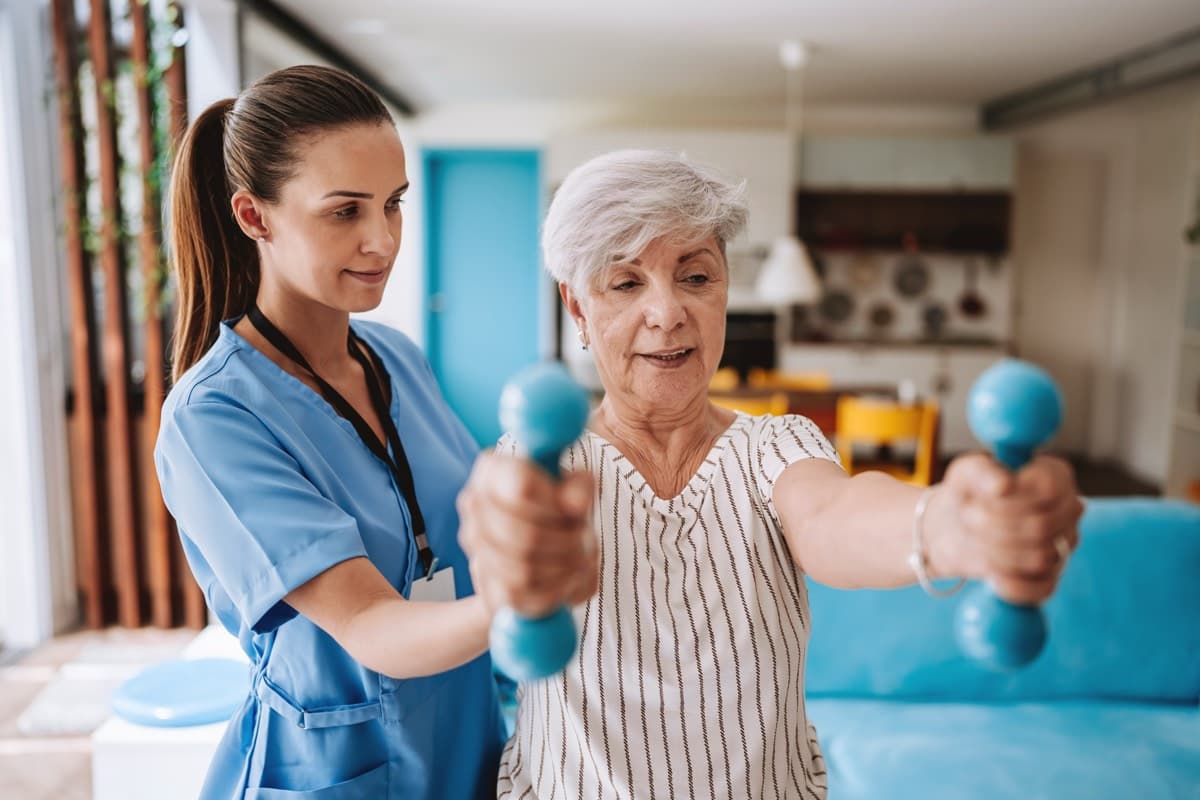
Home physio can include Pilates-based exercises: slow, controlled moves that build deep strength, posture and body control. A physiotherapist chooses and adapts them to your problem, such as back pain, recovery after having a baby or reduced strength with age. You do them on your own floor, with equipment you already have.
FlexAura does not run Pilates classes. What a physio may do is borrow Pilates-style exercises and fit them into your treatment plan, often called clinical Pilates. The exercises are picked for your body, not for a room of twenty people.
What Pilates-based exercise means in home physio
Pilates is a type of exercise that focuses on control, breathing, posture and the deep muscles around your trunk and hips. The NHS lists Pilates as one way to strengthen muscles. It also says regular practice can help with posture, balance and joint mobility.
In a home physio session, the physio first assesses you. They ask about your symptoms, test your strength and watch how you move. Only then do they decide whether Pilates-style moves suit you, and which ones. Some people get two or three Pilates-based exercises alongside walking, stretches or strength work. Others need none at all.
|
|
Group Pilates class |
Pilates-based exercise in home physio |
|
Who leads it |
Pilates instructor |
HCPC-registered physiotherapist |
|
Assessment first |
Usually brief or none |
Full assessment of your problem |
|
Exercises |
Same for the whole group |
Chosen and adapted for you |
|
Pain or injury |
You manage your own limits |
Physio adjusts moves to your symptoms |
|
Where |
Studio or hall |
Your living room |
Who it can suit
People with low back pain
NHS guidance says staying active is one of the best things for back pain. The NHS also notes that more research is needed, but there is some evidence Pilates can help people with lower back pain. NICE guidance for low back pain suggests exercise programmes, including mind-body types, chosen around a person’s needs and preferences. A home physio plan can include Pilates-style moves as one part of that. For more ideas, see our guide to exercises that relieve lower back pain.
After having a baby
Having a baby can weaken the pelvic floor (the muscles that support your bladder, womb and bowel) and stretch your tummy muscles apart. This gap is called diastasis recti. The NHS advises pelvic floor and deep tummy exercises, and suggests avoiding sit-ups, planks and high-impact exercise to start with. Gentle Pilates-based moves fit well here, once your physio has checked you. Home physio also means no packing up the baby and finding parking.
Older adults
The NHS advises adults over 65 to do activities that improve strength, balance and flexibility on at least two days a week. Pilates-style moves can be done lying, sitting or standing beside a chair, which makes them easy to fit into home physio at any level of balance. Our balance exercises for elderly people at home article has more ideas.
Want exercises built around your body? Book a home physio visit with an HCPC-registered, enhanced DBS-checked and insured physiotherapist. You pay after the visit.
Gentle Pilates-based moves a physio may use at home
These are examples only. Your physio will choose, adapt or skip them after assessing you. Move slowly, breathe out on the effort and stop if pain increases.
|
Exercise |
How it is done |
What it trains |
Easier version |
|
Pelvic tilt |
Lie on your back, knees bent, gently flatten then arch your lower back |
Control of your lower back |
Do it sitting on a chair |
|
Knee rolls |
Lie on your back, knees together, let them drop a little to one side and back |
Gentle spine movement |
Smaller range |
|
Bridge |
Lie on your back, squeeze your buttocks and lift your hips a little |
Buttock and back strength |
Lift only a few centimetres |
|
Clam |
Lie on your side, knees bent, lift your top knee while feet stay together |
Hip muscles |
Smaller lift |
|
Four-point reach |
On hands and knees, slide one arm forward, keeping your back still |
Trunk control |
Slide a leg only, or do it standing at a wall |
Home physio of this kind needs very little kit. A mat or folded blanket, a firm cushion and a sturdy chair are usually enough. In a small Edinburgh tenement flat, a strip of floor beside the sofa will do.
How a home physio session with Pilates-style work runs
- Assessment: your history, pain, strength, balance and goals.
- Choosing moves: usually a few, matched to your problem.
- Coaching: simple cues, like “breathe out as you lift”.
- Your plan: a short routine for between visits.
- Review: your home physio progresses the moves as you get stronger.
Staying safe
- Never push through sharp or growing pain.
- After a Caesarean or a hard birth, wait until your physio or GP says you are ready.
- If you have osteoporosis (weaker bones), ask your physio which movements to avoid.
- After hip or spinal surgery, follow your surgeon’s movement rules first.
- Keep breathing. Holding your breath can raise blood pressure.
When to get urgent help Stop exercising and call 999 or go to A&E if you have back pain with numbness around your genitals or bottom, new bladder or bowel problems, weakness or numbness in both legs, or chest pain. Call NHS 111 if back pain comes on suddenly and severely, or you feel hot, shivery and unwell.
What home physio costs
A first FlexAura visit is £110 for 60 minutes, follow-ups are £99 and 5 visits cost £450. No GP referral is needed and there is no cancellation fee. See our pricing page for details, or learn more about our home physio service. If you live in or around the city, our physiotherapy at home in Edinburgh page explains local visits.
Key takeaways
- FlexAura does not run Pilates classes, but your physio may use Pilates-based exercises.
- In home physio, moves are chosen after a full assessment, not copied from a class.
- It can suit back pain, recovery after birth and older adults building strength.
- Small, slow and pain-aware is the rule.
Frequently asked questions
Is Pilates good for back pain?
It can be. The NHS says there is some evidence Pilates helps lower back pain, though more research is needed. Staying active matters most. A physio can check your back first and choose gentle Pilates-based moves that suit your symptoms, rather than a general routine that might aggravate them.
Is a home physio session the same as a Pilates class?
No. A home physio session starts with an assessment of your problem by an HCPC-registered physiotherapist. Any Pilates-style exercises are picked for you and adapted to your pain, strength and goals. A class gives the same routine to everyone, usually without a full health check first.
What is clinical Pilates?
Clinical Pilates means Pilates-based exercises used by a qualified health professional, such as a physiotherapist, as part of treatment. The moves are adapted to your injury or condition. It is usually slower and more tailored than a fitness class, and it sits alongside other parts of your rehab plan.
Is Pilates good for older people?
For many older people, yes. The NHS lists Pilates as a muscle-strengthening activity and advises strength and balance work on at least two days a week for over-65s. Moves can be done seated or beside a chair, so a physio can adjust them to your balance and confidence.
When can I start Pilates after having a baby?
There is no single date. The NHS suggests starting with pelvic floor and deep tummy exercises and avoiding sit-ups, planks and high-impact exercise at first. Your postnatal check at around 6 to 8 weeks is a good time to ask. A physio can check you before you progress.
Conclusion
Pilates-based exercise is a gentle, focused way to rebuild strength and control. In home physio, it is not a class but a set of moves chosen for your back, your body after birth or your balance with age. Done slowly, in your own living room, it can fit easily into everyday life.
- Book a home visit: first visit £110 (60 min), follow-ups £99, or 5 visits for £450. Book your visit.
- Not sure yet? Start with a 30-minute online consultation for £45, or WhatsApp us on 07782 610 633.
Sources
- NHS, “Back pain pilates video workout” (about this video and safety information): https://www.nhs.uk/live-well/exercise/pilates-and-yoga/chronic-back-pain-pilates-exercise-video/
- NHS, “Back pain”: https://www.nhs.uk/conditions/back-pain/
- NHS, “Your post-pregnancy body”: https://www.nhs.uk/conditions/baby/support-and-services/your-post-pregnancy-body/
- NHS, “Physical activity guidelines for older adults” (2024): https://www.nhs.uk/live-well/exercise/physical-activity-guidelines-older-adults/
- NICE, “Low back pain and sciatica in over 16s” (NG59), Recommendations: https://www.nice.org.uk/guidance/ng59/chapter/Recommendations
- NHS, “Physiotherapy”: https://www.nhs.uk/conditions/physiotherapy/
Need Professional Help?
Find a verified, DBS-checked physiotherapist near you and book a home visit or online consultation.
Book Now