Note: This article is general information, not medical advice. Get trained help before moving someone who cannot bear their own weight.
To protect your back as a carer, plan every move, let the person do as much as they can, stay close, keep your back fairly upright and turn with your feet, not your spine. Use simple equipment where possible. A home physio can teach you and your loved one safe ways to move together, in your own rooms.
If you look after someone at home, you probably help them stand, walk, wash or get into bed many times a day. Added up, those small moves can strain your back. A home physio can show you how to share the load safely.
Are you a carer?
The NHS says you are a carer if you regularly look after someone because they are ill, older or disabled, including family. Many family carers never use the word, but it matters, because it opens the door to support.
Moving and handling basics for family carers
“Moving and handling” means helping a person change position, such as standing up, sitting down, rolling in bed or walking. Health and Safety Executive (HSE) guidance on lifting loads at work shares some simple principles that also make sense at home:
- Plan first. Where are you both going? Is the path clear? Do you need a second person or a piece of kit?
- Get close. Stand near the person rather than reaching out to them.
- Feet apart. Keep one foot slightly in front of the other for a stable base.
- Bend a little. Slightly bend your hips and knees. Avoid stooping or deep squatting.
- Turn your feet, not your back. Twisting while bent is a common way to hurt yourself.
- Know your limit. If in doubt, stop and get help.
The most useful rule is to help, not lift. Encourage your loved one to do what they can, such as shuffling forward and pushing up with their own arms. Never try to take the full weight of an adult.
Never lift someone off the floor after a fall. The NHS advises keeping them warm and comfortable, helping them get up carefully only if they can, and not lifting them yourself. Call 999 if they may have hurt their head, neck, back or hip, or cannot get up.
What a home physio teaches carers
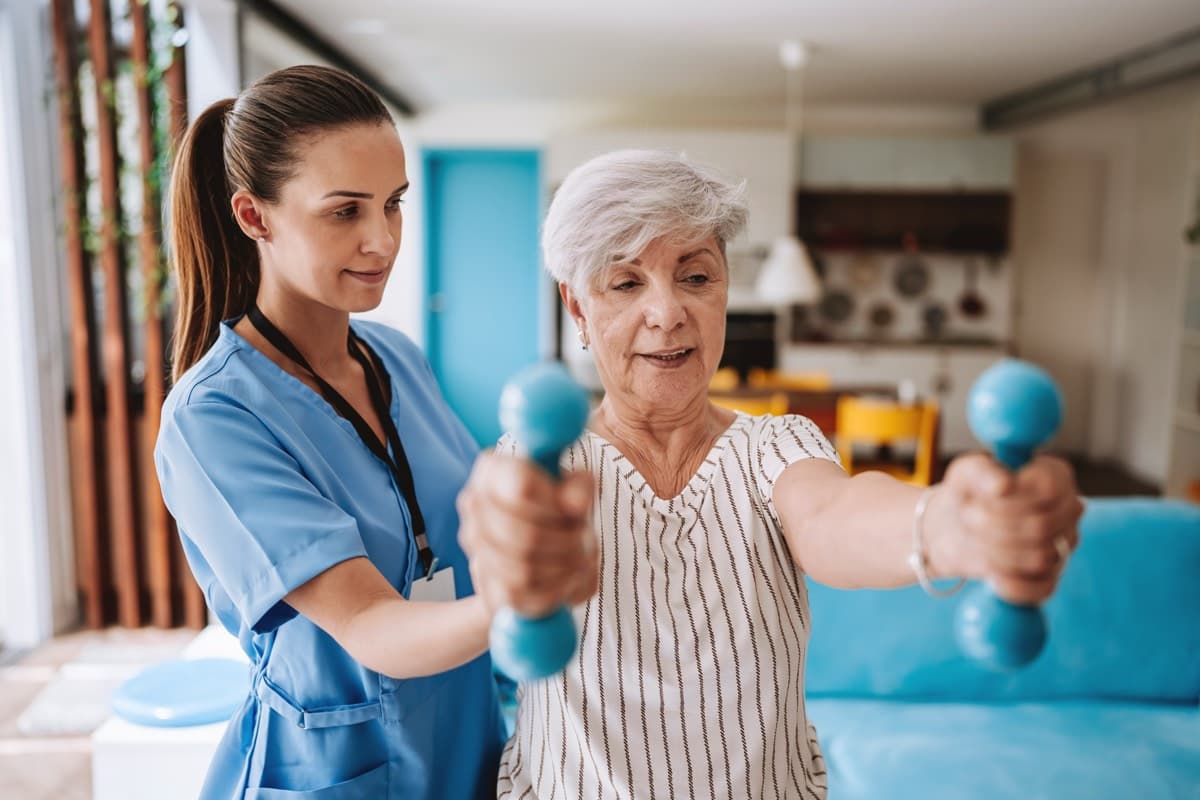
During a visit, a home physio assesses both of you where the moves really happen, such as a narrow landing, low bed or tight bathroom.
|
Daily task |
What a home physio may teach |
|
Standing up from a chair |
Where to place your feet and hands, and how the person can rock forward to rise |
|
Getting in and out of bed |
Rolling onto the side first, then using arms to sit up |
|
Walking indoors |
Where to stand, and whether a walking aid would help |
|
Using the toilet or bath |
Safe positions and which rails or seats may help |
|
Getting up after a fall |
When to call for help, and how the person can rise if able |
|
Your own back |
Simple exercises and posture tips for long caring days |
Your loved one may also get their own exercises from the home physio to build leg strength. Stronger legs often mean they need less help, which protects your back too.
Want a physio to show you both how to move safely? Book a home physio visit with FlexAura. Many physios have same-day or next-day slots, subject to availability.
Equipment that can take the strain
The NHS lists simple gadgets that can make daily tasks easier, such as:
- grab rails by the bed, toilet, bath or shower
- leg lifters (straps to help lift a leg into bed)
- bed raisers and raised toilet seats
- a commode (a chair with a hidden toilet) if reaching the toilet is hard
- non-slip bath and shower mats
The NHS says councils provide equipment and small home changes free to people assessed as needing them, and the needs assessment itself is free. Ask your home physio which kit suits your home, and how to use it safely.
Looking after your own back
Carers often put themselves last. If your back hurts, the NHS advises you to:
- stay active and keep up daily tasks as best you can
- avoid long spells in bed
- try gentle back exercises and stretches, but stop if pain gets worse
- use a wrapped heat pack for stiffness or a wrapped ice pack for pain and swelling
You can also ask your council for a free carer’s assessment. The NHS says anyone over 18 can ask, and it might recommend things such as training on how to lift safely, breaks from caring and local support groups. For more ideas, see our exercises for lower back pain.
When to get urgent help - Call 999 or go to A&E if back pain comes with numbness or weakness in both legs, loss of feeling around your bottom or genitals, or new bladder or bowel problems. - Call NHS 111 or get an urgent GP appointment if back pain is sudden and severe, or you feel hot, shivery or unwell. - See a GP if your back pain has not improved after a few weeks or stops you caring.
Home physio prices with FlexAura
|
Option |
Price |
Useful for |
|
First home physio visit (60 min) |
£110 |
Assessing both of you and teaching safe moves |
|
Follow-up visit |
£99 |
Practising new techniques |
|
5 home visits |
£450 (£90 each) |
Building your loved one’s strength over time |
|
Online consultation (30 min) |
£45 |
Advice on your own back, or planning a visit |
FlexAura physios are HCPC-registered, enhanced DBS-checked and insured. You pay after the visit, with no cancellation fee and no GP referral needed. We visit homes across Merseyside; see our Liverpool page for details.
Key takeaways
- Plan each move, stay close and turn with your feet.
- Help rather than lift, and never take an adult’s full weight.
- Do not lift someone off the floor after a fall.
- Grab rails, leg lifters and raised seats can reduce strain.
- Ask your council for a free carer’s assessment.
Frequently asked questions
How do you protect your back as a carer?
Plan each move, keep close to the person, bend your knees slightly and turn with your feet instead of twisting. Let the person do as much as they can, and use equipment such as rails. Booking a home physio means someone can watch you in action and suggest safer ways to help.
What is moving and handling in care?
Moving and handling means helping someone change position, such as standing, sitting, turning in bed or walking. Good technique protects both the carer and the person being helped. Family carers can ask for advice through a carer’s assessment or a physio.
Can family carers get training on how to lift safely?
Yes. The NHS says a carer’s assessment from your local council might recommend training on how to lift safely. You can also book a home physio to teach you on the same bed, chair and bathroom you use every day.
How do I get a carer’s assessment?
Contact adult social services at your local council and ask for one, by phone or online. It is free for anyone over 18, and looks at how caring affects your health, work, free time and relationships.
How much does a home physio cost?
With FlexAura, the first home physio visit is £110 for 60 minutes and follow-ups are £99. Five visits cost £450, or £90 each. An online consultation is £45 for 30 minutes. You pay after the visit, with no cancellation fee.
Conclusion
Caring for someone you love should not cost you your own health. Plan each move, help rather than lift, use simple equipment and look after your own back. A home physio visit can teach you both safer ways to move in the rooms you use every day, and our Liverpool physio guide explains local options.
- Book a home visit: a registered physio comes to you and you pay after the visit. Book now
- Not sure yet? Ask about your own back pain in an online consultation for £45, or WhatsApp us on 07782 610 633.
Sources
- NHS. Carer’s assessments. https://www.nhs.uk/conditions/social-care-and-support-guide/support-and-benefits-for-carers/carer-assessments/
- NHS. Carers’ breaks and respite care. https://www.nhs.uk/conditions/social-care-and-support-guide/support-and-benefits-for-carers/carer-breaks-and-respite-care/
- NHS. Household gadgets and equipment to make life easier. https://www.nhs.uk/conditions/social-care-and-support-guide/care-services-equipment-and-care-homes/household-gadgets-and-equipment-to-make-life-easier/
- NHS. Back pain. https://www.nhs.uk/conditions/back-pain/
- NHS. Falls. https://www.nhs.uk/conditions/falls/ (page last reviewed 6 March 2025)
- Health and Safety Executive. Manual handling at work: good handling technique. https://www.hse.gov.uk/msd/manual-handling/good-handling-technique.htm
Need Professional Help?
Find a verified, DBS-checked physiotherapist near you and book a home visit or online consultation.
Book Now