In short
Musculoskeletal physiotherapy, often shortened to MSK physio, is the assessment and treatment of problems affecting your muscles, joints, bones, tendons, ligaments and the nerves that run alongside them. It is the branch of physiotherapy most people mean when they say they are "seeing a physio" for a sore back, a stiff neck or a painful knee. FlexAura arranges it in your own home anywhere in the UK, or by online video consultation, with HCPC-registered, DBS-checked physiotherapists.
This guide explains what MSK means, which problems it covers, what a physiotherapist actually does in a session, and how the same care works in a living room or over video. This platform facilitates booking only. It does not provide medical advice.
What does MSK mean in medical terms?
MSK is the medical abbreviation for musculoskeletal. The word joins two systems: the muscular system (muscles and the tendons that attach them to bone) and the skeletal system (bones, joints, cartilage and the ligaments that hold joints together). When a letter, referral or appointment note says "MSK", it simply means the problem is thought to come from these moving parts of the body rather than from an organ such as the heart or lungs.
You will see the abbreviation used in several ways, and they all point to the same area of care:
- MSK condition or MSK injury: a problem with a muscle, joint, bone, tendon or ligament.
- MSK physio or MSK physiotherapist: a physiotherapist who assesses and treats those problems.
- MSK treatment: the plan that follows, usually built around movement, exercise and advice.
- MSK service or MSK clinic: the team or setting that provides the care.
What musculoskeletal physiotherapy covers
Musculoskeletal physiotherapy covers pain, stiffness, weakness or loss of movement anywhere from the neck to the feet. Some problems start suddenly, such as a strain while lifting. Others build slowly, such as a joint that has become stiffer and more painful over months. A physiotherapist looks at how the area moves, what makes it better or worse, and what you need it to do in daily life.
Common reasons people book an MSK physio include:
- Lower back pain and stiffness. Our back pain physiotherapy at home page explains how visits for this are arranged.
- Knee pain when walking, climbing stairs or getting up from a chair, covered on our knee pain physio at home page.
- Neck pain and stiffness, including pain when turning the head. See neck pain physiotherapy at home.
- Shoulder pain and difficulty lifting the arm. See shoulder pain physio at home.
- Joint pain linked to arthritis, and sprains, strains and tendon problems in the hip, ankle, elbow, wrist or hand.
If your problem is not on this list, the full range is set out on our conditions we treat page. Each condition page goes into more detail than this overview, so it is the better place to read about one specific joint.
What counts as an MSK injury?
An MSK injury is damage or irritation to a muscle, tendon, ligament, joint or bone. A pulled muscle, a sprained ankle, a sore tendon from repeated use and a joint that has been jarred in a fall are all MSK injuries. The term is broad on purpose: it describes where the problem sits, not how serious it is.
Not every ache needs treatment. Many minor strains settle as you gradually return to normal movement. A physiotherapy assessment is worth considering when pain is not easing, keeps coming back, stops you sleeping, or limits everyday tasks such as dressing, walking, working or looking after someone else. Recovery varies by person, and a physiotherapist will not be able to promise a timescale.
What an MSK physio does in a session
A musculoskeletal physiotherapy session has two halves: working out what is going on, then agreeing what to do about it. Nothing is done to you without an explanation first, and you can ask questions at any point.
Assessment
The physiotherapist starts by listening. They ask where the problem is, when it started, what eases or aggravates it, your general health and any medication, and what you want to get back to doing. They then look at how you move, which usually means checking the range of movement in the joint, the strength of the muscles around it, and everyday movements such as standing up, walking or reaching.
Treatment
MSK treatment is tailored to what the assessment finds. In general physiotherapy practice it draws on a small number of well-established approaches:
- Exercise: specific movements to restore range, build strength and improve control, shown to you and practised together.
- Hands-on techniques: manual therapy to joints or soft tissue where the physiotherapist judges it appropriate.
- Advice and education: an explanation of the problem, how to pace activity, and how to adapt tasks that set it off.
- A home plan: a short, realistic programme to follow between sessions.
How musculoskeletal physiotherapy works at home
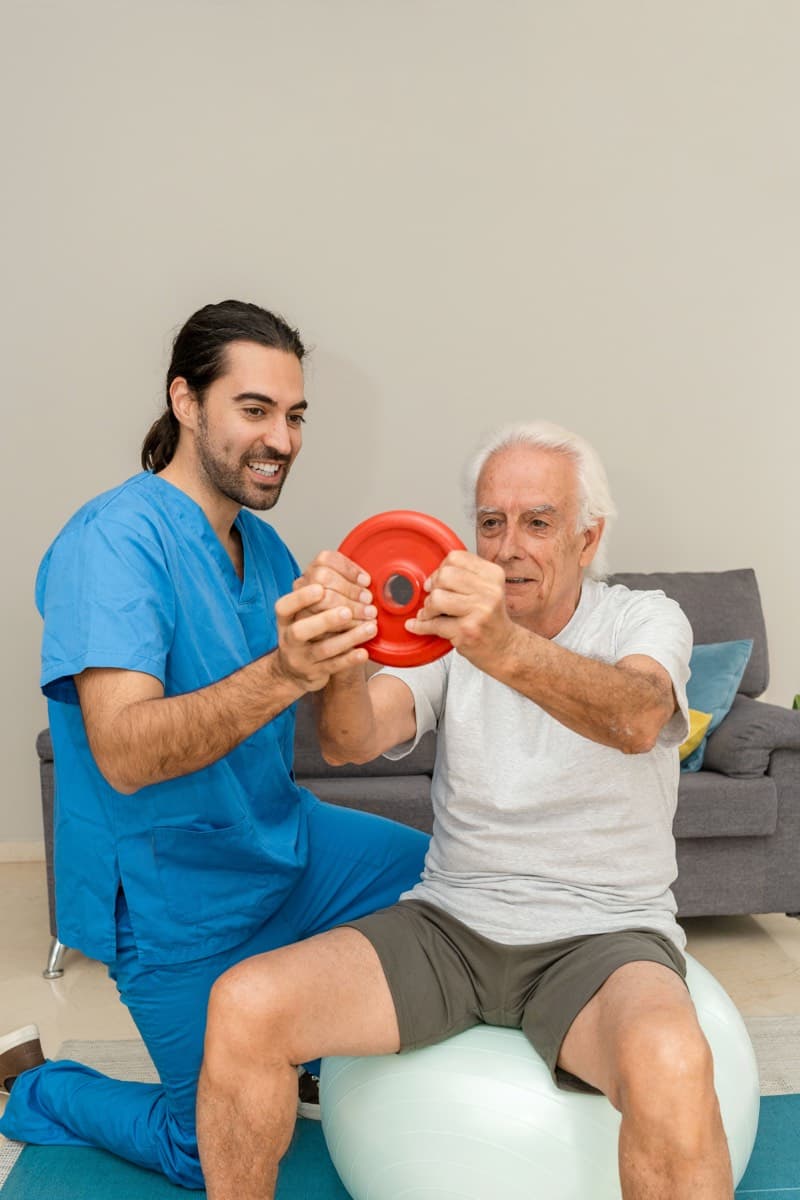
At home, the same assessment and treatment happen in the place where you actually live and move. With FlexAura, every home visit lasts 60 minutes, whether it is the first visit or a follow-up. The physiotherapist comes to your door, so there is no travel, no parking and no waiting room, which matters when sitting in a car or walking far is the very thing that hurts.
Being at home also lets the physiotherapist see the real setting: the stairs you climb, the chair you sit in, the bed you get out of, the desk you work at. Exercises can be fitted around your own furniture and routine, which makes them easier to keep up after the visit ends.
UK Physio Tip: Before your visit, jot down the three everyday movements that bother you most, such as getting out of the car, reaching a high shelf or walking to the shops. Showing your physiotherapist those exact movements at home gives them far more to work with than a pain score alone.
To prepare, wear loose clothing that lets the affected area move and be seen, clear a little floor space, and have any letters, scan reports or a list of medication to hand. If a relative or carer helps you day to day, they are welcome to sit in so they understand the plan too.
Home visit or online MSK physio: which suits you?
Both formats are led by HCPC-registered, DBS-checked physiotherapists. The difference is whether the physiotherapist is in the room. An online consultation works by video: you describe the problem, move in front of the camera, and receive advice and exercises. A home visit adds a hands-on examination and hands-on treatment where appropriate.
| Option | Length | Price | Often chosen when |
|---|---|---|---|
| Online consultation | 30 minutes | £45 | You want advice, an exercise plan or a first opinion by video |
| Home visit, first visit | 60 minutes | £110 | You want a hands-on assessment or find travel difficult |
| Home visit, follow-up | 60 minutes | £99 | You are continuing a plan started at a first visit |
| 5-session home package | 60 minutes per visit | £450 | You expect to need a course of home visits |
You pay after the visit, and there are no cancellation fees. If you have private health cover, many policies cover physiotherapy from HCPC-registered practitioners, but check with your insurer first. Every invoice shows the physiotherapist's HCPC number.
When to see a GP or call 999 instead
Most muscle and joint problems are not dangerous, but some symptoms need medical attention rather than physiotherapy. Call 999 or see a GP urgently for chest pain, sudden weakness or numbness, loss of bladder or bowel control, or a suspected stroke. Do not wait for a physiotherapy appointment if any of these apply.
It is also sensible to speak to your GP or NHS 111 first if pain follows a significant fall or accident, if a joint is very swollen, hot or misshapen, or if you feel generally unwell alongside the pain. A physiotherapist who finds anything during an assessment that needs a doctor's opinion will tell you and advise you to seek it.
How to find musculoskeletal physiotherapy near you
If you have been searching for "musculoskeletal near me", the practical checks are the same wherever you live. Confirm the physiotherapist is registered with the HCPC, the UK regulator for physiotherapists. Ask how long each session lasts and what it costs before you book. And decide whether you would rather travel to a clinic, be seen at home or start with a video call.
FlexAura covers the whole of the UK for home visits and online consultations, so "near me" means your own front room. Tell us what the problem is and where you are, and we match you with a physiotherapist for musculoskeletal physiotherapy at a time that suits you.
Book a Physiotherapist online, Call 07782 610 633, or WhatsApp us to arrange a home visit or an online consultation.
What is MSK physiotherapy?
MSK physiotherapy is short for musculoskeletal physiotherapy. It is the assessment and treatment of problems with muscles, joints, bones, tendons and ligaments, such as back, neck, shoulder and knee pain, usually through exercise, hands-on techniques and advice.
What does MSK stand for?
MSK stands for musculoskeletal. It is a medical abbreviation that combines the muscular system and the skeletal system, and it is used to describe conditions, injuries, treatments and services that relate to the body's muscles, bones and joints.
Can musculoskeletal physiotherapy be done at home?
Yes. A physiotherapist can carry out the same assessment and treatment in your home as in a clinic. FlexAura home visits last 60 minutes and are provided by HCPC-registered, DBS-checked physiotherapists across the UK.
How much does MSK physio cost with FlexAura?
An online consultation is £45. A home visit is £110 for the first visit and £99 for a follow-up, and a 5-session home package is £450. You pay after the visit and there are no cancellation fees.
Is an online MSK physio appointment worth it?
An online consultation suits people who want advice, an explanation of their symptoms and an exercise plan without a visit. It lasts 30 minutes by video. If a hands-on examination would help, a home visit is the better choice.
Need Professional Help?
Find a verified, DBS-checked physiotherapist near you and book a home visit or online consultation.
Book Now