In short
Patellofemoral pain syndrome is a common cause of pain at the front of the knee, around or behind the kneecap. Many people know it as runner's knee, although you do not have to run to get it. It usually builds up gradually when the joint behind the kneecap is asked to do more than it is currently ready for, and it tends to complain on stairs, squats, hills and after long spells of sitting.
The usual approach is not complete rest. It is a period of doing a little less of what aggravates the knee, followed by steady strengthening of the thigh and hip muscles and a gradual return to normal activity. A physiotherapist can assess the knee, explain what is driving the pain and build a plan around your home, your work and your sport.
What is patellofemoral pain syndrome?
The patellofemoral joint is where the kneecap (patella) sits in a groove at the lower end of the thigh bone (femur). Each time you bend and straighten the knee, the kneecap glides in that groove while the thigh muscles pull through it. Patellofemoral pain syndrome, often shortened to PFPS, is the name for pain that comes from this area when no other specific injury explains it.
You may also see it called anterior knee pain, which simply means pain at the front of the knee, or runner's knee. These terms overlap heavily in everyday use. It affects people of many ages and activity levels, including runners, cyclists, gym-goers, walkers and people whose jobs involve a lot of kneeling, squatting or stair climbing.
What it feels like: an ache in the front of the knee
The typical complaint is a dull ache in the front of the knee that is hard to point to with one finger. People often sweep a hand around the kneecap when asked where it hurts. It can affect one knee or both, and it commonly comes and goes depending on what you have been doing over the previous few days.
Common patterns include:
- pain in front of the knee when going up or, more often, down stairs and hills
- discomfort when squatting, kneeling, lunging or getting up from a low chair
- the front of the knee aches after sitting for a long time with the knees bent, for example at a desk, in a car or at the cinema
- knee pain at the front during or after running, jumping or cycling
- a grinding or clicking feeling under the kneecap, which on its own is common and not usually a sign of harm
Pain from this joint does not normally cause a hot, very swollen knee, a knee that gives way completely or a knee that locks so it cannot straighten. Those symptoms point to something else and need checking, as explained in the section on when to see a GP below.
Why the front of the knee hurts
If the front of your knee hurts and there was no fall, twist or blow to explain it, the most likely story is one of load. The joint behind the kneecap handles large forces when the knee bends under body weight. It copes well when activity builds up gradually, and it can become sore when the amount, intensity or type of activity changes faster than the tissues can adapt.
Things that commonly come up when a physiotherapist takes the history include:
- a recent jump in running distance, speed, hills or training days
- starting a new sport, class or gym programme with lots of squats, lunges or jumps
- a change of job, home or routine that adds stairs, kneeling or long periods of sitting
- returning to activity after a break, illness or another injury
- reduced strength or control in the thigh and hip muscles, which changes how load is shared across the knee
Often several small factors add up rather than one clear cause. This is also why scans are not routinely needed: the pain usually reflects a sensitive, overloaded joint rather than a structure that has been damaged. A sore kneecap joint is uncomfortable, but activity within sensible limits is generally considered safe and is part of getting better.
Treating patellofemoral syndrome: what helps first
The first step in treating patellofemoral syndrome is load management. That means temporarily reducing the activities that clearly stir the knee up, without stopping everything. Keeping generally active matters, because muscles that are rested completely get weaker, and weaker muscles leave the knee less able to cope when you return.
Practical changes many people find useful:
- shorten or slow runs, and swap hills for flatter routes for a while
- keep squats and lunges to a shallower, comfortable depth
- break up long periods of sitting by standing or straightening the knees regularly
- use lower-impact exercise such as swimming or walking on the flat to stay fit
- avoid kneeling directly on the sore knee where you can
A useful rule of thumb is to let pain guide you. Mild discomfort that settles soon after activity is generally acceptable. Pain that is sharp, that builds as you continue, or that leaves the knee noticeably worse the next day is a sign to do a little less next time. A pharmacist can advise on pain relief if you need it.
UK Physio Tip: Keep a simple diary for a fortnight. Note what you did each day and how the knee felt that evening and the next morning. Patterns show up quickly on paper, and they give your physiotherapist a clear picture of how much activity your knee tolerates right now.
Strengthening: the main part of PFPS treatment
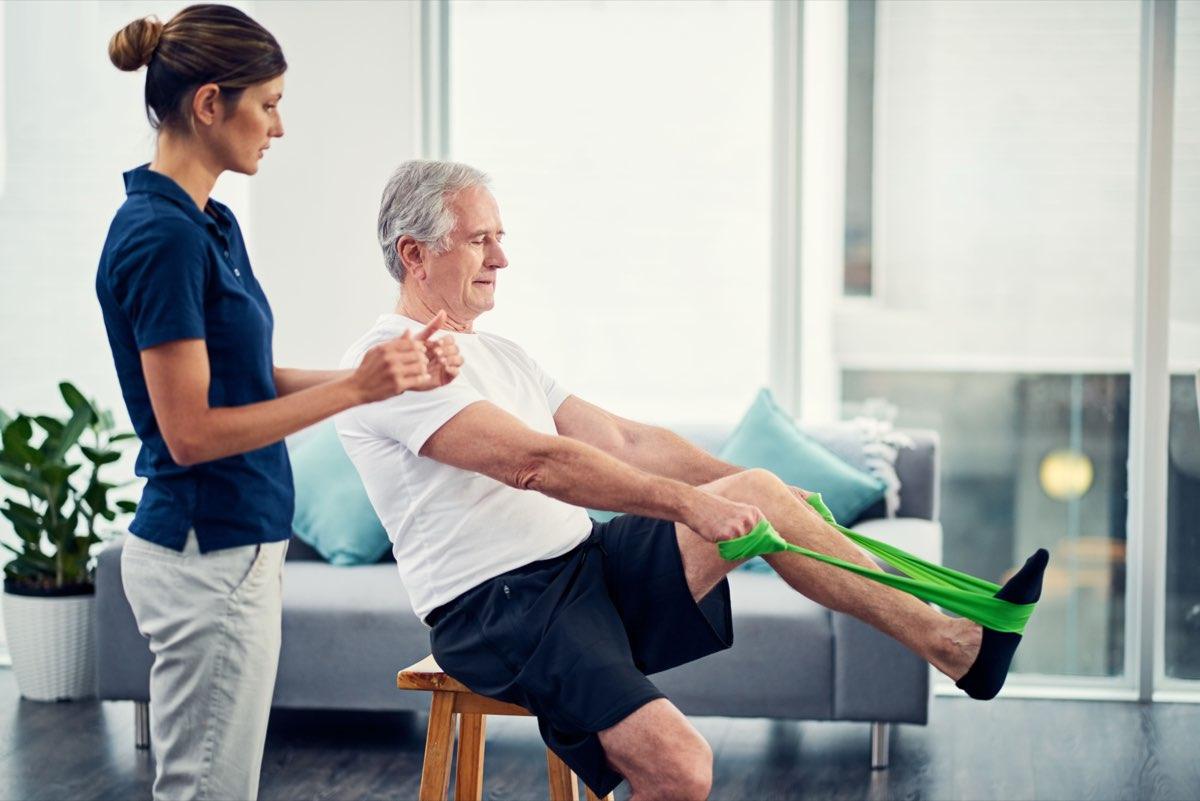
Once the knee has calmed a little, exercise becomes the main part of PFPS treatment. Programmes usually target the muscles at the front of the thigh and around the hip and buttock, because these control how the knee bends under load. Exercises start at a level the knee tolerates and are made harder in small steps as strength and confidence improve.
The right starting point differs from person to person, so the table below shows the kind of exercises a physiotherapist might choose from rather than a programme to follow.
| Type of exercise | What it works | How it is usually progressed |
|---|---|---|
| Side-lying leg raises, clams, bridges | Hip and buttock muscles | More repetitions, then a resistance band |
| Straight leg raises, shallow wall sits | Front of thigh with little knee bending | Longer holds, then deeper positions |
| Sit-to-stand, shallow squats, step-ups | Thigh and hip working together under body weight | Lower chair, higher step, slower lowering |
| Single-leg balance and controlled step-downs | Control of the knee and hip on one leg | Added movement, then sport-specific drills |
Other measures, such as taping the kneecap, shoe inserts or changes to running technique, are sometimes used alongside exercise to make activity more comfortable. They are generally treated as short-term helpers rather than a replacement for strengthening. Improvement tends to be gradual, how long it takes varies by person, and flare-ups along the way are common and not a sign of failure.
How a physiotherapist assesses anterior knee pain at home
A home visit starts with a conversation about when the anterior knee pain began, what brings it on, your work, your sport and what you want to get back to. The physiotherapist then looks at how the knee, hip, ankle and foot move, checks muscle strength and watches everyday tasks such as squatting, stepping down and standing on one leg.
Seeing you at home has practical advantages. The physiotherapist can look at the stairs you actually use, your desk set-up and the space and equipment you have for exercise, then build the programme around them. You are shown each exercise, try it with feedback and are left with a written plan so that you know what to do between visits.
FlexAura arranges visits from HCPC-registered, DBS-checked, insured physiotherapists anywhere in the UK. Every home visit lasts 60 minutes. A home visit costs £110 for the first visit and £99 for a follow-up, and a 5-session home package is £450. An online consultation lasts 30 minutes and costs £45. You pay after the visit and there are no cancellation fees. Full details are on the home physiotherapy pricing page.
If your knee problem turns out to be something other than PFPS, the same assessment will pick that up. You can read more about how we help with other knee problems on our knee pain physiotherapy at home page.
When to see a GP instead
Most pain at the front of the knee that comes on gradually is not serious. Some symptoms are not typical of patellofemoral pain syndrome, though, and should be checked by a doctor before you start exercises. The NHS guidance on knee pain explains where to get help. Contact your GP or NHS 111 if:
- the knee is very swollen, has changed shape, or became painful after a fall or injury
- you cannot put weight on the leg, or the knee gives way or locks
- the knee is hot and red, or you feel feverish and unwell
- the pain is severe, wakes you at night or is steadily getting worse
- the pain has not started to improve after a few weeks of looking after it yourself
Call 999 or see a GP urgently for chest pain, sudden weakness or numbness, loss of bladder or bowel control, or a suspected stroke. This platform facilitates booking only. It does not provide medical advice. If you are unsure whether physiotherapy is the right first step, speak to your GP or NHS 111 first.
Getting back to running, cycling and sport
Runner's knee does not usually mean giving up running. The aim is to find a level the knee tolerates now and build from there. Many runners begin with shorter, flatter, slower runs on alternate days, add distance before speed, and bring hills and faster sessions back last. Strength work continues alongside, because it is what allows the knee to cope with more.
Cyclists often benefit from checking saddle height and position and easing off heavy gears and long climbs for a while. Our article on knee pain after cycling looks at bike-related knee pain in more detail. For team sports, court sports and gym training, the same principle applies: reintroduce jumping, deep squats and sudden changes of direction step by step.
If you want a structured return to sport plan, sports injury physiotherapy at home covers assessment, strengthening and a graded return to training. No physiotherapist can promise a particular result or timescale, but a clear plan and regular review make it easier to keep progressing and to handle setbacks calmly.
If an ache in the front of the knee is stopping you from running, training, working or simply using the stairs comfortably, an assessment can tell you what is going on and what to do next. Choose a home visit or an online consultation, with no cancellation fees. Book a Physiotherapist online, Call 07782 610 633 or WhatsApp us to arrange a time that suits you.
Patellofemoral pain syndrome: common questions
Is patellofemoral pain syndrome the same as runner's knee?
In everyday use, yes. Runner's knee is the common name for patellofemoral pain syndrome, and anterior knee pain is a broader term that is often used for the same problem. It is not limited to runners. Cyclists, walkers, gym users and people with jobs that involve stairs, squatting or kneeling get it too.
Should I rest completely if the front of my knee hurts?
Usually not. Complete rest tends to weaken the muscles that support the knee. Most people do better by cutting back on the specific activities that aggravate the pain, staying active in more comfortable ways and then strengthening the thigh and hip muscles gradually. If the pain is severe or followed an injury, get it checked first.
Do I need a scan for pain in front of the knee?
Often not. This kind of knee pain is usually identified from your history and a physical examination. A GP or physiotherapist may suggest further tests if your symptoms do not fit the usual pattern, if the knee is swollen, locking or giving way, or if it is not improving as expected.
How long does PFPS treatment take to work?
It varies by person, and nobody can promise a timescale. It depends on how long the knee has been sore, how much activity you need it to cope with and how consistently you can do the strengthening work. Progress is normally gradual, with occasional flare-ups, which is why a plan that is reviewed and adjusted helps.
Can a physiotherapist treat my knee at home?
Yes. Assessment and exercise-based treatment for this condition need very little equipment, so they work well at home. FlexAura physiotherapists are HCPC-registered, DBS-checked and insured, and visit anywhere in the UK. A first home visit is £110 for 60 minutes, and you pay after the visit. An online consultation is also available.
Need Professional Help?
Find a verified, DBS-checked physiotherapist near you and book a home visit or online consultation.
Book Now