Introduction:
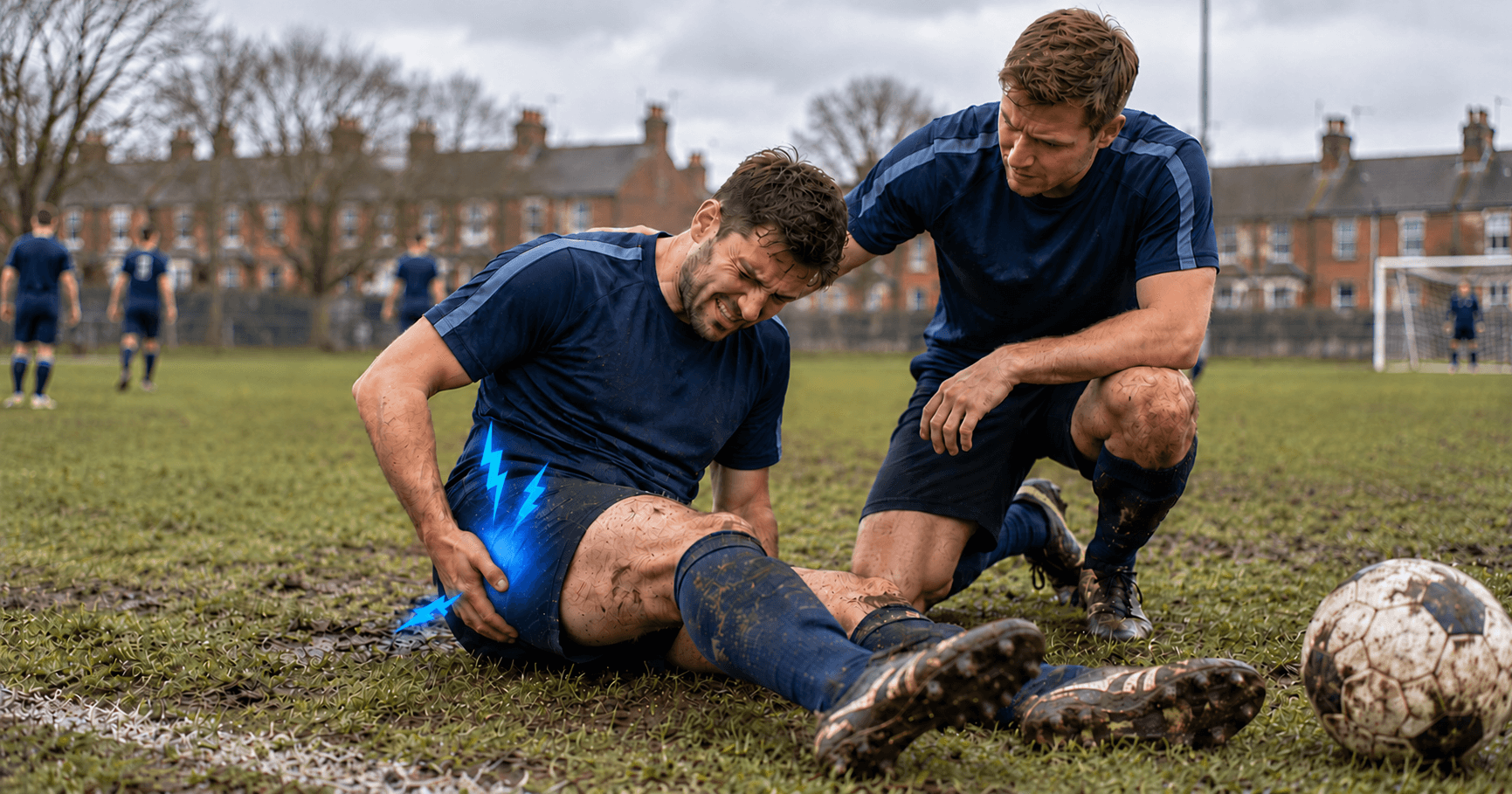
It’s twenty minutes into the second half on a cold Sunday morning. The pitch is heavy, the ball’s just been knocked over the top, and you set off after it. Three strides in, there’s a sharp grab at the back of your thigh. You pull up, hand on your leg, and hobble to the touchline while someone shouts “walk it off”.
If you play Sunday league in Liverpool, you’ve either been that player or you’ve watched it happen to a teammate. Hamstrings, rolled ankles and tight groins are the bread and butter of grassroots football injuries, from the muddy council pitches to the 3G cages under floodlights on a Wednesday night.
The first question is always the same: how long am I out for? In this guide, we’ll give you an honest answer on pulled hamstring recovery time, explain what to do in the first few days, and cover the other two big Sunday league injuries: ankle sprains and groin strains. We’ll also share the simple habits that keep you playing all season.
Why Sunday League Players Get Injured
Professional players have warm-ups, recovery staff and a full week of training. Most Sunday league players have a Saturday night, a rushed breakfast and a quick jog across the car park. That’s not a criticism; it’s just real life. But it does explain why the same injuries keep coming up.
- Cold muscles. Winter kick-offs, little or no warm-up and sudden sprints are a recipe for hamstring and groin strains.
- Fatigue. Tired muscles are more likely to tear, which is why so many injuries happen late in the game.
- Uneven pitches. Divots, ruts and frozen ground make it easy to roll an ankle.
- Switching surfaces. Going from grass on Sunday to 3G five-a-side midweek changes the load on your joints.
- Stop-start fitness. Weeks off for work or family, then straight back into a full 90 minutes.
- Old injuries. A previous hamstring or ankle injury is one of the biggest risk factors for doing it again.
The same factors affect pulled hamstring recovery time too: a muscle that was cold, tired or underprepared when it went usually needs more careful rebuilding before it’s ready for match day.
Pulled Hamstring: What It Is and How It Feels
Your hamstrings are the three muscles running down the back of your thigh, from your bottom to just below your knee. They work hard when you sprint, especially as your leg reaches forward and your foot hits the ground. A “pulled hamstring” means some of those muscle fibres have been overstretched or torn.
Typical signs, as described by the NHS guide to hamstring injuries, include:
- A sudden, sharp pain in the back of the thigh, sometimes with a popping or snapping feeling
- Tenderness, then swelling and bruising over the next few hours
- Pain when you try to walk, straighten your knee or bend forward
- Difficulty putting weight on the leg in more severe injuries
Pulled Hamstring Recovery Time: How Long Will I Be Out?
Here’s the honest answer: pulled hamstring recovery time depends on how badly the muscle is injured. According to the NHS, mild injuries to the hamstring can take just a couple of days to heal, whereas severe injuries might require weeks or even months. If surgery is needed for a complete tear, recovery takes several months.
Physios usually grade hamstring injuries to give a clearer idea. As a rough guide (every injury is different):
- Grade 1 (mild strain): some tightness and discomfort, but you can walk normally. Often back to football in around one to three weeks with sensible rehab.
- Grade 2 (partial tear): clear pain, a limp and often bruising. Commonly around three to eight weeks before a safe return.
- Grade 3 (complete or near-complete tear): severe pain, major bruising and difficulty walking. This needs a medical assessment and can mean months out, sometimes with surgery.
The biggest factor in pulled hamstring recovery time isn’t the first week. It’s whether you rush back. Hamstring injuries have a reputation for coming back, and a re-injury usually means a longer layoff than the first one. Returning when you’re genuinely ready is the fastest route back over a whole season.
What to Do in the First 2–3 Days
The NHS recommends PRICE for the first two to three days after a hamstring injury:
- Protect the leg from further injury
- Rest it and avoid putting weight on it if it’s painful
- Ice it, wrapped in a towel, for up to 20 minutes every two to three hours
- Compress it with a snug (not tight) elastic bandage, removed at bedtime
- Elevate it on a pillow when you can
For the first few days, also avoid heat, massage and alcohol, which can increase swelling and bleeding. Once the pain allows, start moving gently so the muscle doesn’t stiffen up. Walking short distances and gentle range-of-motion movements are usually a good start.
Get help quickly if: you felt or heard a loud pop with severe pain, you can’t walk or stand on the leg, the bruising or swelling is large and spreading, or it isn’t improving after a few days. Contact NHS 111 or your GP. A complete tear may need specialist care.
Rehab: Getting Back to the Pitch
Good rehab is what shortens pulled hamstring recovery time and stops it happening again. A typical progression looks something like this:
- Early stage: gentle walking, pain-free range of movement and light muscle activation, such as lying on your back and pressing your heel gently into the floor.
- Strength training: bridges, single-leg bridges, and hamstring curls using a resistance band while gradually adding weight.
- Running: steadily adding speed to jogging in a straight line over several sessions
- Sprinting and football training: acceleration drills, direction changes, passing or shooting
- Return to play: only once you can sprint flat out, kick hard and change direction without pain or hesitation.
A useful test: if you’re still nervous about opening up into a full sprint, you’re probably not ready for match day yet.
Ankle Sprains: The Divot Special
The second most familiar Sunday league injury is the rolled ankle. You land awkwardly, step in a rut or get caught in a tackle, and your foot turns inwards. The ligaments on the outside of the ankle are stretched or torn.
Signs include pain, swelling and bruising around the ankle, and difficulty walking. The NHS advice on sprains and strains recommends the same PRICE approach for the first two to three days. Most sprains feel better after about two weeks, but the NHS advises avoiding strenuous exercise like running for up to eight weeks. Severe sprains can take months.
The mistake most players make is stopping rehab as soon as they can walk without a limp. An ankle that hasn’t had its balance and strength restored is much more likely to go again. Simple balance work, such as standing on one leg while brushing your teeth and progressing to standing on a cushion, makes a big difference.
Go to A&E or call 999 if: you heard a crack, the ankle looks misshapen, you can’t put any weight on it, or your foot is numb, cold or a different colour. These can be signs of a fracture.
Groin Strains: The Slow Burner
Groin strains usually affect the adductor muscles on the inside of the thigh. They often come from stretching for a ball, a long pass, a sudden change of direction or striking the ball with power.
Unlike a hamstring, a groin strain often creeps up. It might start as tightness after games that you ignore for a few weeks, until it becomes a sharp pain when you kick or sprint. Common signs include pain on the inside of the thigh or groin, pain when bringing your legs together, and pain when kicking or twisting.
Early treatment follows the same principles: calm it down, then rebuild strength. Adductor squeezes (gently squeezing a ball between your knees) and side-lying leg raises are common starting points. Groin pain that keeps coming back, or that is felt low in the tummy, is worth getting properly assessed, as there can be other causes.
How to Stay Injury-Free All Season
The best way to cut your pulled hamstring recovery time is not to need it in the first place. These habits make a real difference:
- Warm up properly. Ten minutes of jogging, dynamic stretches, skipping and short sprints before kick-off. Structured routines like the FIFA 11+ programme are designed exactly for this.
- Do Nordic hamstring curls. Kneel with someone holding your ankles and slowly lower your body forwards, controlling it with your hamstrings. Start with a few reps once or twice a week.
- Build balance. Single-leg balance and hopping drills help protect your ankles.
- Strengthen your groin and hips. Adductor squeezes and side planks a couple of times a week.
- Ease back in after time off. A few training sessions or five-a-side games before a full 90 minutes.
- Look after recovery. Sleep, food and fluids matter more than most people realise, especially after a big Saturday night.
When to See a Sports Physio
It’s worth booking an assessment if:
- The pain is severe, or you can’t walk normally after a few days
- You’ve had the same injury before
- You want an accurate idea of your pulled hamstring recovery time and a clear rehab plan
- You’re not improving as expected after a week or two
- You’re nervous about getting back on the pitch
A physio will work out exactly what’s injured and how badly, give you a realistic timeline and guide you through each stage of rehab. Through our sports injury physiotherapy at home service, we treat hamstring, ankle and groin injuries with hands-on care, structured exercise and a clear return-to-play plan. Knee niggles from football are common too; see our knee pain physiotherapy page. If long seasons leave your lower back aching, our back pain physiotherapy page can help.
Home Physio for Liverpool Footballers
When you’ve just pulled a hamstring, the last thing you want is to drive across the city and limp from a car park to a clinic. With home visit physiotherapy, your physio comes to you, often the same week, and fits around work, training and family life.
FlexAura has HCPC-registered, DBS-checked physios covering Liverpool and Merseyside. See our home physio in Liverpool page for local details, or browse physiotherapy near me if you play elsewhere.
Our pricing is straightforward: £110 for a first home visit and £99 for follow-ups, with no travel fees and nothing to pay until after your session. A 5-visit package for £450 covers a full rehab programme.
Frequently Asked Questions
What is the typical pulled hamstring recovery time?
Mild hamstring strains often settle in a few days to a few weeks. Moderate tears usually take several weeks, and severe or complete tears can take months. The NHS notes that severe hamstring injuries can take weeks or months to heal.
Can I play football with a pulled hamstring?
Not until you can sprint flat out, kick hard and change direction without pain. Returning too early is the most common cause of re-injury.
How long does a sprained ankle take to heal?
According to the NHS, most sprains feel better after about two weeks, but you should avoid strenuous exercise like running for up to eight weeks. Severe sprains can take months.
Should I use heat or ice on a pulled hamstring?
Use ice in the first two to three days and avoid heat, massage and alcohol during that time. Movement and strength training will ensure that the muscle heals after that.
Back on the Pitch, Not Back on the Bench
Grassroots football is about turning up every Sunday with your mates, not sitting on the touchline with an ice pack. Knowing your realistic pulled hamstring recovery time, treating injuries properly and doing a few simple preventive exercises can keep you playing all season long.
Book a sports physio in Liverpool or call 07782 610 633 to get back in the team sheet.
This article is for general information and isn’t a substitute for personalised medical advice. If you have a severe injury, can’t bear weight, or are worried about your symptoms, contact NHS 111, your GP or emergency services.
Need Professional Help?
Find a verified, DBS-checked physiotherapist near you and book a home visit or online consultation.
Book Now