In short
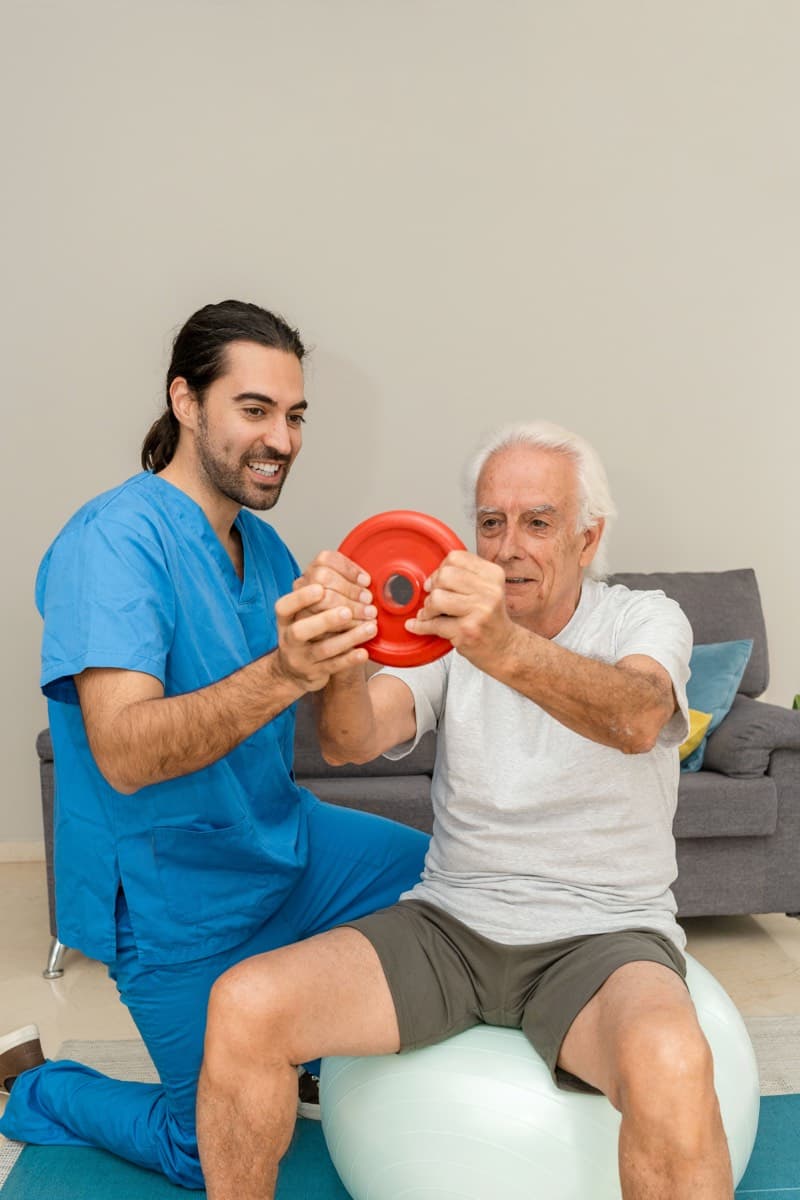
Rheumatoid arthritis physiotherapy is a programme of assessment, gentle movement, exercise and self-management advice that works alongside your rheumatology team. It aims to help you keep moving comfortably, protect your joints and stay as independent as possible. FlexAura's HCPC-registered, DBS-checked physiotherapists can see you at home, or online by video.
Physiotherapy does not replace the medical care your rheumatology team or GP provides. If your joints suddenly become hot, swollen and more painful than usual, contact your GP or rheumatology team first, because a flare-up may need a medical review before exercise is changed.
What rheumatoid arthritis physiotherapy involves
Rheumatoid arthritis is a long-term condition in which the immune system affects the lining of the joints. It often involves the hands, wrists, feet and knees, and it can bring stiffness, swelling and tiredness. Physiotherapy looks at how this affects your daily life, then builds a plan around what you want to keep doing.
A physiotherapist does not manage your medication. Their role is the movement side of your care: joint mobility, muscle strength, balance, walking, pacing your energy and the practical way you perform everyday tasks. They work as part of the wider team that looks after you.
What a home visit looks like
At your first visit the physiotherapist asks about your joints, your symptoms, your medication routine as you understand it, and how your good and bad days differ. They then examine how you move, how your joints feel and how you manage the stairs, the bathroom, the kitchen and getting up from a chair.
Seeing you at home is a real advantage with rheumatoid arthritis. Stiffness is often worse in the morning, and travelling to a clinic can be tiring. At home the physiotherapist sees your actual environment and can adapt exercises to your own furniture and space. Our physiotherapy at home service explains the process in more detail.
- A full assessment of your joints, strength, movement and balance
- A clear explanation of what the findings mean for you
- A short exercise programme that fits your routine
- Advice on pacing activity and resting between tasks
- A plan to review at follow-up visits
Exercise and rheumatoid arthritis
Gentle, regular movement is a standard part of physiotherapy for inflammatory arthritis. Your physiotherapist may suggest range-of-movement exercises to keep joints supple, light strengthening to support the muscles around them, and low-impact activity such as walking. The right amount differs from person to person and from one week to the next.
Exercise is adjusted to how you feel. On a day when your joints are calmer, you might do more. When joints are sore or swollen, the plan usually becomes gentler or shifts toward rest and positioning. Your physiotherapist will show you how to judge the difference and when to stop.
UK Physio Tip: Keep a short note of how your joints feel each morning and after exercise. It helps your physiotherapist adjust your plan, and it gives your rheumatology team a clearer picture at appointments.
Looking after your joints day to day
Alongside exercise, a physiotherapist can talk through joint protection. This means finding easier ways to do ordinary tasks so that small joints are not overloaded. It includes how you lift, grip and carry, how long you stay in one position, and how you break up busier days with short rests.
Fatigue is common with rheumatoid arthritis, so pacing matters as much as exercise. Planning heavier jobs for the times of day you feel best, and spreading them out, can make the week feel more manageable. Your physiotherapist will help you build a routine you can keep up.
Working with your rheumatology team
Your rheumatology team leads the medical management of your condition. Physiotherapy sits alongside it. If you notice a change, such as new swelling, joints that feel warm, or symptoms that are worsening, tell your GP or rheumatology team. Your physiotherapist will do the same if they have concerns during a visit.
It helps to tell your physiotherapist about any changes to your treatment and any advice you have been given, so that exercises fit with your wider care. You can also share your plan with your rheumatology team if you wish.
When to seek urgent help
Call 999 or see a GP urgently for chest pain, sudden weakness or numbness, loss of bladder or bowel control, or a suspected stroke. For a flare-up that is making your joints much more painful, swollen or hard to use, contact your GP or rheumatology team promptly rather than waiting for your next physiotherapy session.
This platform facilitates booking only. It does not provide medical advice.
Joint pain in the knees and other areas
Rheumatoid arthritis can involve larger joints too. If your knees are a main concern, our page on knee pain physiotherapy at home explains how a knee assessment works. If you are unsure whether symptoms are linked to the weather, our article on whether cold weather makes arthritis worse may help.
You can browse other conditions we see on our conditions page. If your condition is not listed, you can still ask us about it when you book.
Cost and booking
An online consultation costs £45. A home visit costs £110 for the first visit and £99 for a follow-up, and there is a 5-session home package at £450. You pay after the visit, and there are no cancellation fees. Full details are on our pricing page.
FlexAura is rated 5.0 on Google. Physiotherapists visit patients at home anywhere in the UK, and online video consultations are also available. To get started, Book a Physiotherapist, call 07782 610 633 or WhatsApp us.
Can physiotherapy help with rheumatoid arthritis?
Physiotherapy can support movement, strength, balance and everyday function alongside your medical care. It does not treat the underlying condition, and results vary by person. Your rheumatology team continues to lead your medical management.
Is exercise safe if my joints are inflamed?
It depends on how you feel at the time. During a flare-up, exercise is usually reduced or changed, and you should contact your GP or rheumatology team. Your physiotherapist will help you adjust activity to suit each day.
Can I have rheumatoid arthritis physiotherapy at home?
Yes. HCPC-registered, DBS-checked physiotherapists visit patients at home across the UK, and online video consultations are also available if you prefer.
How much does a home visit cost?
A home visit costs £110 for the first visit and £99 for a follow-up. An online consultation is £45, and you pay after the visit. There are no cancellation fees.
Need Professional Help?
Find a verified, DBS-checked physiotherapist near you and book a home visit or online consultation.
Book Now