In short
Good exercise for over 60s mixes four things: activity that gets you slightly out of breath, such as brisk walking; strength work for the legs, arms and trunk; balance practice; and gentle movement to keep joints flexible. Start lower than you think you need to, build up gradually over the following weeks, and check with your GP first if you have a heart or lung condition, have had recent surgery or have fallen.
This guide is for people in their sixties who want to start exercising again, or for the first time, and for family members helping them. It explains what to include, how to build up safely, which warning signs mean you should stop, and how an HCPC-registered, DBS-checked physiotherapist can set up a programme you can follow in your own home.
Why exercise matters more after 60
Muscle strength, balance and stamina tend to drop as we get older, particularly during long spells of sitting or after an illness or hospital stay. The encouraging part is that the body keeps responding to exercise at any age. People who start in their sixties can still become stronger, steadier on their feet and more confident on stairs, slopes and uneven pavements.
The benefits reach well beyond fitness. Regular movement helps with everyday jobs such as carrying shopping, getting up from a low sofa, gardening or playing with grandchildren. Many people also find it lifts their mood, helps them sleep and gives the week a routine. The NHS physical activity guidelines for older adults recommend a mix of aerobic, strength and balance activity, and reducing time spent sitting.
The four types of exercise to include
A balanced week does not need a gym membership. It needs a little of each of the four types below, chosen to suit your health, your joints and what you enjoy. Doing something you like is the best predictor that you will keep going.
1. Aerobic activity
This is anything that raises your heart rate and makes you breathe a little faster while you can still hold a conversation. Brisk walking is the simplest option. Swimming, aqua aerobics, cycling, dancing and gardening count too. If walking is painful, a static bike or water-based exercise puts less load through the knees and hips.
2. Strength exercises
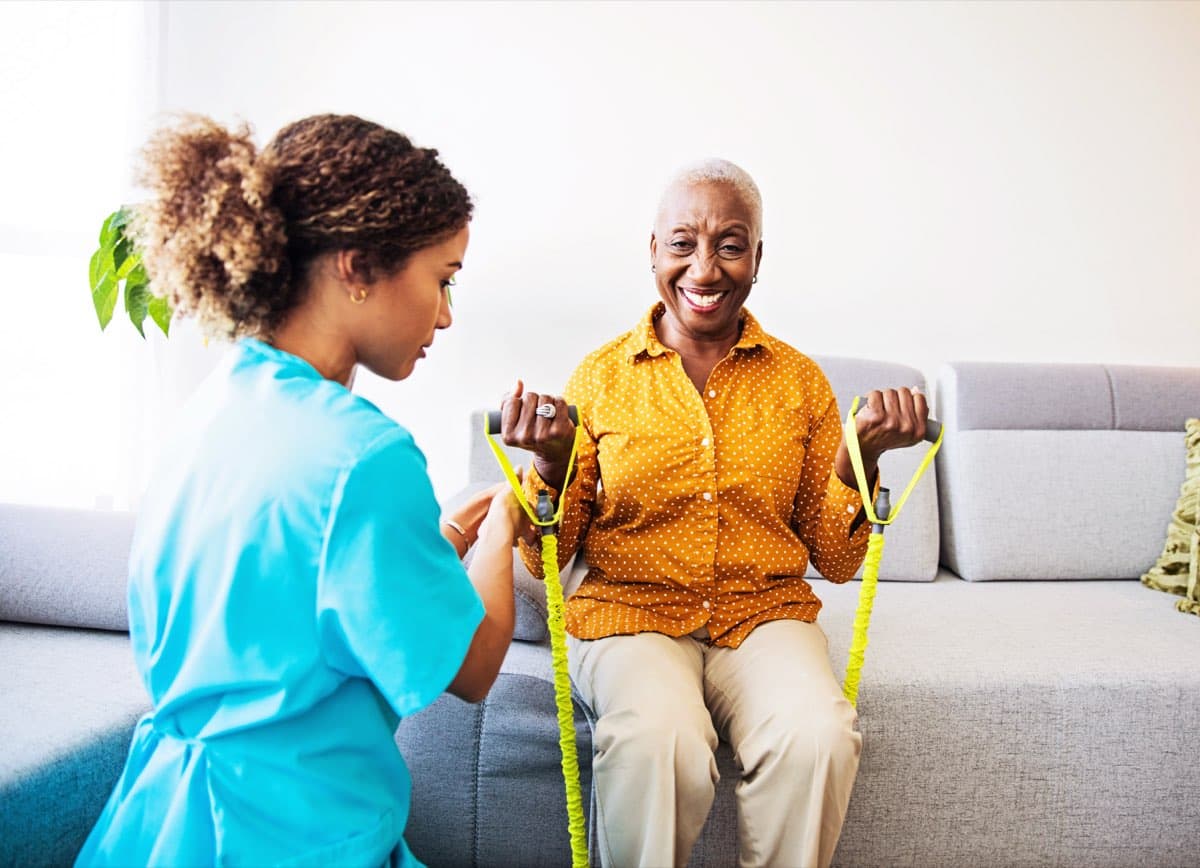
Strength work keeps the large muscles of the legs, hips, back, chest and arms working well. Useful examples include sit-to-stands from a firm chair, wall press-ups, step-ups on the bottom stair while holding the banister, and lifting light weights or tins of food. Resistance bands are cheap and easy to store. Aim for slow, controlled movements rather than speed.
3. Balance practice
Balance is a skill that fades when it is not used, and it is closely linked to the risk of falls. Simple drills include standing with one foot in front of the other, heel raises while holding a worktop, and walking heel to toe along a hallway. Tai chi and some dance classes train balance in a sociable way. Our guide to checking balance and fall risk at home explains a simple test you can do safely.
4. Flexibility and mobility
Gentle stretching and mobility work help you reach high shelves, turn to check behind you when driving and put on socks and shoes. Keep stretches slow and comfortable, never bouncing. Shoulder rolls, ankle circles, calf stretches against a wall and gentle trunk turns are a good starting set, and they make a useful warm-up before a walk.
How to start exercising safely after 60
The most common mistake is doing too much in the first week, feeling sore or tired, and stopping altogether. A steady, gradual start works far better. These steps help most people get going without setbacks.
- Start from where you are. If you have been mostly sitting, a short walk around the block or a few sit-to-stands is a real start.
- Increase one thing at a time. Add a little more time, distance or repetitions, but not all three together.
- Warm up and cool down. A few minutes of easy marching on the spot and gentle mobility before and after makes exercise more comfortable.
- Use the talk test. You should feel warmer and slightly out of breath, yet still able to speak in sentences.
- Expect mild muscle ache, not pain. Some stiffness a day or two after new exercise is normal. Sharp pain, or pain that keeps getting worse, is a sign to ease off and get advice.
- Spread activity across the week. Several shorter sessions are easier to keep up, and kinder to joints, than one long one.
UK Physio Tip: Link your exercises to things you already do every day. Do a few sit-to-stands each time the kettle boils, heel raises while you brush your teeth, and a short walk after lunch. Habits attached to daily routines are much easier to keep than a separate workout you have to remember.
When to check with your GP before you start
Most people over 60 can begin gentle exercise without seeing a doctor first. It is sensible to speak to your GP before starting, or before stepping up the intensity, if any of the following apply to you.
- A heart condition, high blood pressure that is not well controlled, or a history of chest pain
- A lung condition such as COPD or asthma that limits your breathing
- Recent surgery, including a joint replacement or heart procedure
- One or more falls, or frequent dizziness or unsteadiness
- Diabetes, especially if you take insulin or have problems with your feet
- Osteoporosis, or a past fracture from a minor bump or fall
Your GP may simply give you the go-ahead, adjust your medication, or suggest which types of activity suit you best. Having that conversation first means you can build up with more confidence.
Warning signs: when to stop and get help
Stop exercising straight away and seek help if you get chest pain or tightness, unusual breathlessness, or feel dizzy or faint during exercise. Call 999 or see a GP urgently for chest pain, sudden weakness or numbness, loss of bladder or bowel control, or a suspected stroke. Do not try to push through these symptoms or wait to see whether they settle.
Less urgent signs still deserve attention. If a joint stays swollen, you notice new pain that does not ease with rest, or you feel much more tired than usual for several days, pause the exercise that triggered it and speak to your GP or a physiotherapist before carrying on.
Exercising with arthritis, joint pain or reduced mobility
Joint pain is one of the main reasons people over 60 give for not exercising, yet the right kind of movement often helps stiff joints feel better. Low-impact options such as walking on flat ground, cycling, swimming and seated strength work put less stress through painful knees and hips than running or jumping.
If standing for long is difficult, or balance is poor, exercise can start in a chair. Seated marching, leg extensions, arm raises and trunk turns all build strength and stamina safely. Our guide to chair exercises you can do at home walks through a full seated routine. As strength improves, many people move on to standing exercises with a worktop or chair back for support.
| If this applies to you | Gentler options to try | Worth avoiding at first |
|---|---|---|
| Painful knees or hips | Swimming, static bike, seated strength work, flat walking | Running, jumping, deep squats |
| Poor balance or a recent fall | Supported balance drills, chair exercises, tai chi with support | Unsupported single-leg work, uneven ground on your own |
| Breathing condition | Short walks with rests, gentle intervals, seated exercise | Long sustained effort without pauses |
| Recently out of hospital | Short, frequent bouts of walking and sit-to-stands | Returning straight to your old routine |
How a physiotherapist can help you exercise at home
Some people are happy to start on their own. Others feel unsure where to begin, worry about falling, are managing a long-term condition, or have tried before and given up because something hurt. A physiotherapist can assess what is holding you back and design a plan that fits your body, your home and your goals.
With FlexAura, HCPC-registered, DBS-checked, insured physiotherapists visit patients at home anywhere in the UK. A home visit lasts 60 minutes. The physio will ask about your health and goals, watch how you move, test strength and balance, and then teach you a small set of exercises using your own chair, stairs and furniture, so the programme works in the space you actually live in.
Online video consultations are also available and last 30 minutes, which suits people who feel confident moving at home and mainly want a programme checked and progressed. Our elderly physiotherapy at home page explains how visits work for older adults and their families.
What it costs
An online consultation is £45. A home visit is £110 for the first visit and £99 for a follow-up, and a 5-session home package is £450. Patients pay after the visit, and there are no cancellation fees. You can see the full details on our pricing page. Many health insurance policies cover physiotherapy from HCPC-registered practitioners, so check with your insurer first; every invoice shows the HCPC number.
This platform facilitates booking only. It does not provide medical advice.
If you would like help starting or progressing exercise after 60, Book a Physiotherapist online, or Call 07782 610 633. You can also WhatsApp us.
Frequently asked questions
What is the best exercise for over 60s?
There is no single best exercise. A good week combines aerobic activity such as brisk walking, strength exercises for the main muscle groups, balance practice and gentle stretching. The best choice for you is the one you enjoy, can do safely and will keep doing.
Is it too late to start exercising at 60 or older?
No. Muscles, balance and stamina continue to respond to exercise at any age. Start gently, build up gradually and check with your GP first if you have a heart or lung condition, recent surgery or a history of falls.
Should over 60s do strength training?
Yes. Strength exercises help with everyday tasks such as climbing stairs, standing up from a chair and carrying shopping, and they support balance. Body-weight moves, resistance bands and light weights all work. Focus on slow, controlled movements with good form.
Can a physiotherapist set up an exercise programme at home?
Yes. A FlexAura physiotherapist can visit you at home for a 60-minute assessment, test your strength and balance, and teach you a programme that uses your own furniture and stairs. A 30-minute online consultation is also available.
Need Professional Help?
Find a verified, DBS-checked physiotherapist near you and book a home visit or online consultation.
Book Now