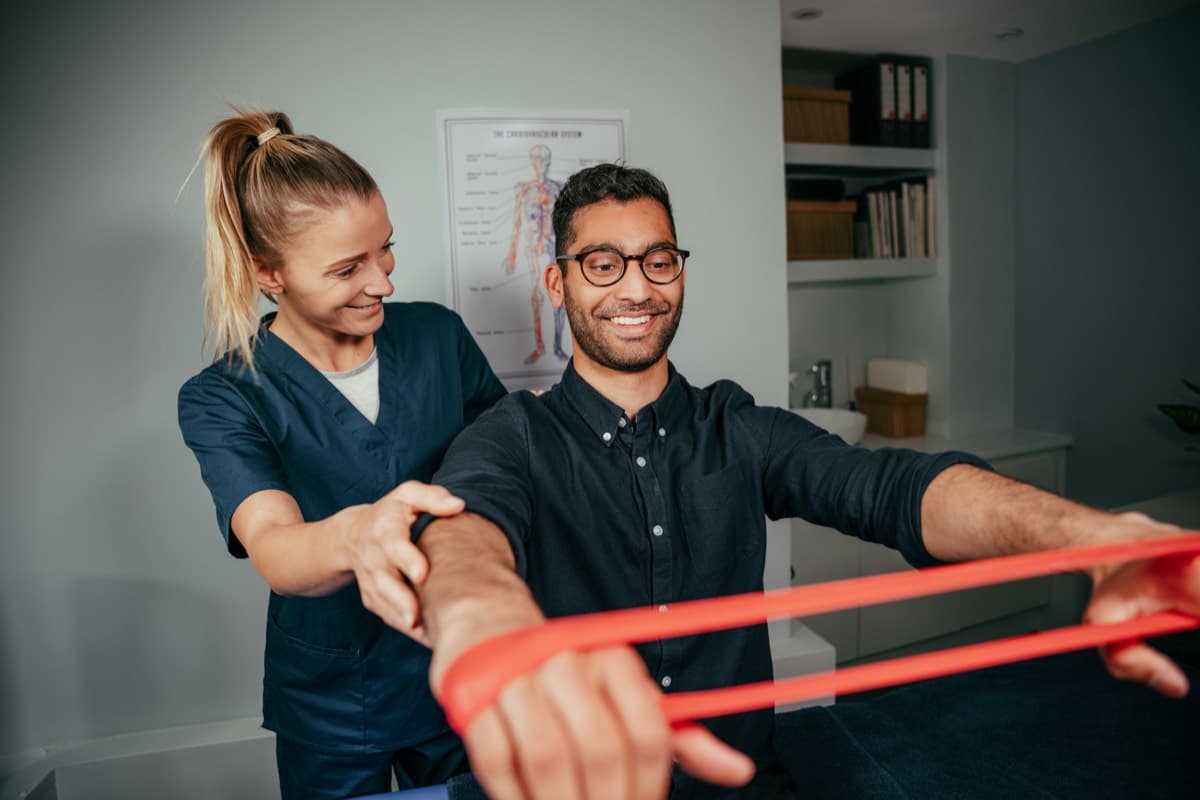
In short: what a soft tissue injury is
A soft tissue injury is damage to a muscle, tendon or ligament, most often a strain, a sprain or a deep bruise. It usually follows a twist, a fall, a knock or doing more than the tissue was ready for. Typical signs are pain, swelling, bruising and difficulty using the area. Most settle with sensible self-care and a gradual return to movement, but some need checking to rule out a broken bone.
This guide explains what soft tissue damage means, where it tends to happen, what to do in the first days, how recovery usually unfolds and when to get help. FlexAura's HCPC-registered, DBS-checked physiotherapists assess and treat these injuries at home across the UK, or by online video consultation. This platform facilitates booking only. It does not provide medical advice.
What is soft tissue damage?
Soft tissue is the name for the parts of the body that support and move the skeleton without being bone. That includes muscles, the tendons that attach muscle to bone, and the ligaments that hold joints together. When people talk about damaged soft tissue, they usually mean that some of those fibres have been overstretched, partly torn or bruised.
| Type of injury | Tissue affected | Common example |
|---|---|---|
| Strain | Muscle or tendon | A pulled hamstring or calf, a strained lower back |
| Sprain | Ligament | A twisted ankle or a knee that gave way on a turn |
| Bruise (contusion) | Muscle and the tissue under the skin | A dead leg after a direct knock |
These injuries range from a mild overstretch that is sore for a few days to a more serious tear that makes the joint feel unstable. The words do not tell you how severe an injury is, which is why the symptoms and how you can use the limb matter more than the label.
Soft tissue injury symptoms
Symptoms tend to appear straight away or build over the first day. You may notice some or all of the following around the injured area:
- pain, tenderness or weakness, often worse when you move or load the area
- swelling or bruising, which can spread or change colour over several days
- muscle spasms or cramping, particularly with a strain
- stiffness and difficulty moving the joint through its normal range
- trouble putting weight through the limb or gripping and lifting as usual
A broken bone can cause very similar symptoms, so it is not always possible to tell a bad sprain from a fracture by how it feels. If you are unsure, use the red-flag list further down this page and get the injury checked.
Where soft tissue injuries are most common
Soft tissue injury in the knee
The knee relies on ligaments and surrounding muscles for stability, so twisting on a planted foot, an awkward landing or a tackle can sprain a ligament or strain the muscles around the joint. Swelling, a feeling that the knee might give way and pain on stairs are common complaints. A knee that locks, will not straighten or keeps buckling should be assessed.
Soft tissue damage in the foot and ankle
Rolling the ankle on a kerb or uneven ground is one of the most familiar ways to damage soft tissue in the foot. The ligaments on the outside of the ankle are usually affected, and bruising often tracks down towards the toes. Our step-by-step guide on how to treat a sprained ankle covers this injury in detail.
Back, thigh and calf
Muscle strains are common in the lower back, hamstrings, groin and calf, often after lifting, sprinting or a sudden change of direction. They can feel like a sharp pull at the time and a deep ache afterwards. If your ache came on without a clear injury, our guide to the common causes of muscle pain may be a better starting point.
What to do in the first days
The NHS advice on sprains and strains for the first couple of days is to rest the area from the activity that caused the injury, apply an ice pack wrapped in a tea towel for short periods, support it with a bandage, and keep it raised on a pillow where you can.
The NHS also advises avoiding heat, such as hot baths and heat packs, as well as alcohol and massage for the first couple of days, to help limit swelling. A pharmacist can advise on suitable pain relief. If you are weighing up ice against warmth later on, read our guide to ice or heat for sprains and strains.
UK Physio Tip: Rest means stepping back from what hurt it, not keeping the limb completely still. Once you can move the area without sharp pain, small, gentle movements several times a day help to stop the joint and muscle stiffening up.
How long does a soft tissue injury take to heal?
There is no single recovery time for soft tissue injuries, because it depends on which tissue is damaged, how badly, your general health and what you need to get back to. The NHS says most sprains and strains feel better after about 2 weeks, that strenuous exercise such as running should be avoided for up to 8 weeks because of the risk of further damage, and that severe injuries can take months to get back to normal.
Those are general ranges and recovery varies by person. Feeling better is also not the same as being ready for sport or heavy work, as strength and balance usually lag behind pain. A physiotherapist can give you a more realistic estimate once they have examined the injury and seen how it responds over the first sessions.
Getting moving again
General physiotherapy practice is to return to movement in stages and let symptoms guide the pace. A typical progression looks like this:
- Gentle range-of-movement exercises as soon as they are comfortable.
- Normal walking or everyday use of the arm, building up time and distance.
- Strengthening work for the injured muscle and the muscles around the joint.
- Balance and control exercises, especially after ankle and knee sprains.
- A gradual return to running, sport or manual work, starting below your usual level.
Mild discomfort that eases quickly is usually acceptable. Pain that is sharp, that increases swelling, or that is worse the next morning is a sign to step back a stage. If you keep getting stuck at the same point, that is a good reason to have the injury assessed.
Soft tissue therapy and massage: where they fit
Soft tissue therapy is a broad term for hands-on techniques applied to muscles, tendons and the tissue around them. Soft tissue massage is the best known of these. Within physiotherapy it is used as one part of treatment, for example to ease muscle tightness and make movement more comfortable, so that you can get on with the exercises that rebuild strength.
It is not usually the starting point for a fresh injury, as the NHS advises avoiding massage for the first couple of days. Hands-on treatment on its own is also unlikely to be enough after a significant sprain or strain. Your physiotherapist will decide whether it is appropriate after assessing you, and will explain what it is for.
When to get a soft tissue injury checked
Some injuries need urgent assessment because the symptoms can point to a broken bone or a more serious injury. Go to A&E or an urgent treatment centre if:
- you cannot put weight on the injured leg or foot
- the joint or limb looks deformed or has changed shape
- the area is numb, or you have lost feeling beyond the injury
- there is severe swelling straight after the injury
Call 999 or see a GP urgently for chest pain, sudden weakness or numbness, loss of bladder or bowel control, or a suspected stroke. Call NHS 111 or see a GP if the pain or swelling is getting worse instead of better, or if the injury is not improving after you have treated it yourself.
How a physiotherapist helps at home
A physiotherapist starts by asking how the injury happened and what you can and cannot do, then examines the area: swelling, range of movement, strength, joint stability and how you walk or use the limb. From that they explain what is likely to be injured, and they will tell you if they think you need a scan or a medical opinion first.
Treatment is then built around your goals and may include a graded exercise plan, hands-on techniques, advice on activity and work, and a plan for returning to sport. Our sports injury physiotherapy at home page explains how visits work for strains, sprains and other sporting injuries.
FlexAura home visits last 60 minutes and cost £110 for the first visit and £99 for a follow-up, with a 5-session home package at £450. An online consultation is 30 minutes and costs £45. You pay after the visit and there are no cancellation fees. To arrange an assessment, Book a Physiotherapist online, call 07782 610 633 or message us on WhatsApp.
What is the difference between a sprain and a strain?
A sprain is an injury to a ligament, the tissue that connects bones at a joint, and is common in the ankle, knee and wrist. A strain is an injury to a muscle or tendon, often in the back, hamstring or calf. Both are soft tissue injuries and the early care is similar.
How long does a soft tissue injury take to heal?
It varies by person and by injury. The NHS says most sprains and strains feel better after about 2 weeks, but severe ones can take months, and strenuous exercise such as running should be avoided for up to 8 weeks. A physiotherapist can estimate your recovery after assessing the injury.
Should I rest or keep moving with soft tissue damage?
Rest from the activity that caused the injury for the first couple of days, then begin gentle movement as pain allows. Keeping the area completely still for long periods tends to lead to stiffness and weakness. Build activity up gradually and ease off if pain or swelling increases.
Is massage good for a soft tissue injury?
Not straight away. The NHS advises avoiding massage for the first couple of days to help limit swelling. Later on, soft tissue massage can be one part of physiotherapy alongside exercise, if your physiotherapist thinks it is suitable for your injury.
When should I see a physiotherapist?
Consider an assessment if the injury is not improving, keeps flaring up when you return to activity, or leaves the joint feeling weak or unstable. Go to A&E or an urgent treatment centre first if you cannot put weight on it, it looks deformed, or it is numb.
Need Professional Help?
Find a verified, DBS-checked physiotherapist near you and book a home visit or online consultation.
Book Now