In short
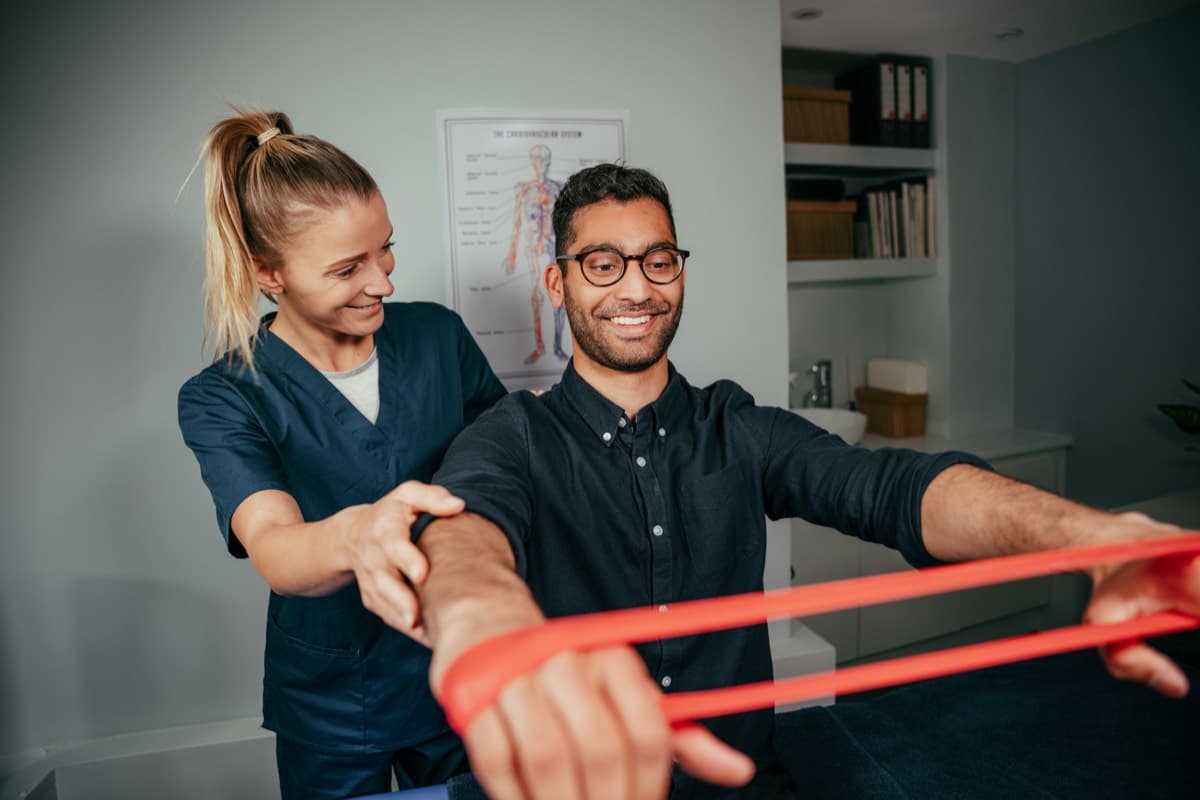
Tennis elbow physiotherapy is an assessment-led programme that looks at why the outer side of your elbow hurts when you grip, lift or type, then builds a plan around load management and graded strengthening. A HCPC-registered, DBS-checked physiotherapist can do this at your home or over video. Recovery varies by person, and no outcome can be promised.
Tennis elbow does not need a tennis racket. It is a common overuse problem where the tendons on the outside of the elbow become irritated, and it often follows repetitive gripping, DIY, gardening, keyboard work or a sudden increase in activity. This guide explains what physiotherapy involves and how a home or online appointment works.
What tennis elbow feels like
Most people notice pain on the bony point on the outside of the elbow. It can spread down the forearm and tends to flare when you shake hands, turn a door handle, pick up a kettle or wring out a cloth. Mornings can feel stiff, and the grip may feel weaker than usual on the sore side.
The NHS describes tennis elbow as a condition that usually improves on its own over time, and it lists simple self-care steps on its tennis elbow page. Physiotherapy is useful when symptoms linger, keep returning or get in the way of work and daily tasks.
How physiotherapy helps tennis elbow
A physiotherapist starts by working out what is actually driving your pain. Elbow pain can come from the tendon itself, but the neck, shoulder or wrist can also play a part, so a thorough check matters. The aim is to match the plan to your job, hobbies and how irritable the tendon currently is.
Treatment usually combines several elements, and the mix changes as you progress:
- Advice on which activities to adjust, and how to keep moving without repeatedly flaring the tendon.
- Graded strengthening for the forearm muscles, increased step by step as the tendon tolerates more.
- Stretching and mobility work for the wrist, elbow and, where relevant, the neck and shoulder.
- Guidance on grip, posture and workstation set-up if desk or tool use is part of the problem.
- A plan for returning to sport, gardening, lifting or work at a sensible pace.
Home or online: what an appointment looks like
Because tennis elbow is largely a movement and loading problem, it suits an appointment at home or by video. Your physiotherapist will ask about your symptoms, check your elbow, wrist, shoulder and neck movement, test your grip and look at the tasks that provoke pain, often using the objects you actually use at home.
You then leave with a clear exercise plan you can follow in your own space. Follow-up visits check how the tendon is responding and progress the exercises. Home visits, online consultations and a multi-session package are all available, and you can see the details on our pricing page.
| Option | Best suited to | Price |
|---|---|---|
| Online consultation | Assessment and exercise plan by video, no travel needed | £45 |
| Home visit, first visit | Hands-on assessment and a plan built around your own home or workspace | £110 |
| Home visit, follow-up | Progressing exercises and checking technique | £99 |
| 5-session home package | A structured course of visits | £450 |
Patients pay after the visit, and there are no cancellation fees. If you are looking for physiotherapy near me or a private physio near me, a home or online appointment saves you travelling to a clinic.
Tennis elbow and other elbow problems
Not every sore elbow is tennis elbow. Pain on the inner side of the elbow points elsewhere, and a similar outer-elbow problem can appear in racket sports other than tennis. Our post on padel elbow covers the sport-specific side, including how racket play can load the same tendons.
If your pain is mainly linked to sport, our sports injury physio at home page explains how we assess and plan a return to activity. A physiotherapist will tell you if your symptoms suggest something other than tennis elbow and whether you should see your GP.
What you can do between appointments
Small changes often make a real difference while you wait to be seen or between visits. None of these replaces an assessment, and your physiotherapist will tailor them to you.
- Reduce, rather than completely stop, the activities that clearly flare the pain.
- Avoid heavy gripping with a straight wrist, such as lifting a full kettle with one hand.
- Vary repetitive tasks, and take short breaks from typing, tool use or racket play.
- Keep the arm moving gently so the elbow and wrist do not stiffen.
- Introduce any strengthening exercises gradually, and stop if they sharply increase your pain.
UK Physio Tip: Note which exact movements set off your elbow pain before your appointment, for example lifting a mug, using a screwdriver or a mouse. Specific examples help your physiotherapist shape an exercise plan around the tasks that matter to you.
When to see a GP or call 999
Most elbow pain is not an emergency, but some symptoms need prompt medical attention. Call 999 or see a GP urgently for chest pain, sudden weakness or numbness, loss of bladder or bowel control, or a suspected stroke. See your GP if the elbow is hot, swollen or deformed after an injury, or if you have a fever alongside the pain.
This platform facilitates booking only. It does not provide medical advice. Your physiotherapist will advise you on your own situation and tell you if you need to be seen by another clinician.
Book tennis elbow physiotherapy at home
If elbow pain is limiting your grip, your work or your hobbies, a physiotherapist can assess it and agree a plan with you. Our HCPC-registered, DBS-checked, insured physiotherapists visit patients at home anywhere in the UK, and online video consultations are also available. We are rated 5.0 on Google.
You can Book a Physiotherapist online, call 07782 610 633 or WhatsApp us to arrange an appointment.
Do I need a GP referral for tennis elbow physiotherapy?
No referral is needed to book a private physiotherapy appointment with us. If you have red-flag symptoms or an injury with swelling or deformity, speak to a GP or call 999 first, as appropriate.
Can tennis elbow physiotherapy be done online?
Yes. A video consultation allows a physiotherapist to talk through your symptoms, watch you move and demonstrate exercises. A home visit adds hands-on checking of the elbow, wrist and grip.
How many sessions will I need?
It varies by person. It depends on how long the problem has been present, how irritable the tendon is and what you need to do with your arm. Your physiotherapist will discuss this after your first assessment.
Should I rest a sore elbow completely?
Complete rest is rarely the answer. Adjusting the activities that provoke pain while keeping the arm gently active is usually more helpful, and your physiotherapist can guide how much to do.
How much does a visit cost?
An online consultation is £45. A home visit is £110 for the first visit and £99 for a follow-up, and a 5-session home package is £450. Patients pay after the visit, with no cancellation fees.
Need Professional Help?
Find a verified, DBS-checked physiotherapist near you and book a home visit or online consultation.
Book Now