In short
If you want to know how to improve circulation, the most useful thing you can do is move more often. Regular walking, ankle pumps, calf raises and simple hand exercises all help blood move through your legs, feet and hands. Keeping warm and changing position often help too. Poor circulation is a symptom, though, so ask your GP to find the cause, especially if you are older or have diabetes.
This guide is for older adults and the families who help them. It covers safe exercises for the feet and legs, what helps cold hands, the warning signs that need a doctor, and how a FlexAura physiotherapist can set up a routine with you at home. Every exercise here can be done sitting in a chair or holding onto a kitchen worktop.
What poor circulation is, and why the cause matters
Circulation is the way your heart pumps blood out through your arteries and back through your veins. When blood flow to your hands or feet drops, you may notice cold or numb fingers and toes, pins and needles, skin that turns white, blue or red, or legs that ache and cramp when you walk. On brown or black skin, colour changes can be harder to see, and fingertips may simply look paler.
Poor circulation describes what you feel. It is not a diagnosis, and it has several possible causes, each treated differently. The main ones a GP will think about are:
- Peripheral arterial disease (PAD): fatty deposits narrow the arteries in the legs. The typical sign is calf pain when walking that eases after a few minutes of rest. The NHS guide to peripheral arterial disease lists the other signs.
- Diabetes: over time, raised blood sugar can affect the blood vessels and nerves in the feet, so sores may heal slowly and you may not feel them.
- Raynaud's: fingers and toes change colour and feel painful or numb in the cold or when you are stressed. The NHS page on Raynaud's explains the common triggers.
- Vein problems: varicose veins and weak valves in the leg veins can leave legs swollen, heavy or aching.
Treatment for poor circulation in hands and feet depends on the cause. A GP may feel the pulses in your feet, compare the blood pressure in your arms and ankles, and arrange blood tests, for example to check for diabetes. Exercise is part of the plan for many people, but no exercise, cream or pair of socks fixes the cause on its own. We do not give advice on medicines or supplements, so take any questions about those to your GP or pharmacist.
When to get urgent help
Most cold hands and feet are not an emergency. Some changes are, and they need medical help before you try any of the exercises below.
- Call 999 if a leg or foot suddenly becomes cold, pale or blue and painful. This can mean the blood supply has been blocked.
- Get urgent medical help if one calf is swollen, warm, red or darkened and painful. This can be a blood clot (deep vein thrombosis). Ask for an urgent GP appointment or contact NHS 111, and call 999 if you also feel short of breath or have chest pain.
- Call 999 for chest pain, sudden weakness or numbness in the face, arm or leg, or any other sign of a stroke.
- See a GP if you get pain in your calf, thigh or buttock when walking that eases when you rest. This is a common sign of PAD and is worth checking even if it feels mild.
- See a GP about sores, cuts or blisters on your feet that are not healing, especially if you have diabetes.
- See a GP if colour changes in your fingers happen on one side only, start for the first time after the age of 30, or come with joint pain, rashes or muscle weakness.
If you are not sure how serious a symptom is, NHS 111 can help you decide where to go. Stop any exercise in this guide that brings on chest pain, dizziness or severe leg pain, and get advice before you try it again.
How to improve circulation with walking and everyday movement
Your calf muscles work like a pump. Each time they tighten, they squeeze blood in the leg veins back up towards the heart. That is why walking is one of the simplest answers to how to improve blood circulation in the legs and feet. You do not need long walks. Several short walks spread through the day often suit older adults better than one long one.
Start where you are. If walking to the end of the garden is enough for now, do that a few times a day and add a little more each week. Use your walking aid if you have one and wear well-fitting shoes with a closed heel. If you have not been active for a while, or you have PAD or a heart condition, check with your GP before you start and follow any walking plan they give you.
Small changes through the day matter as much as planned exercise. These habits help circulation without any equipment:
- Get up and move at least once an hour when you are sitting, even if it is only a walk to the kitchen.
- Avoid sitting with your legs crossed for long periods. Rest both feet flat on the floor instead.
- Change position often in your chair or in bed.
- Wear warm socks and roomy shoes. Avoid tight socks that leave deep marks, unless a clinician has fitted compression stockings for you.
- Keep your home warm in winter and dress in layers when you go out.
- If you smoke, the NHS advises stopping, as smoking can make circulation problems worse.
If your feet feel cold after a long sit and you want to know how to boost circulation there and then, stand up and walk around for a few minutes or do 20 ankle pumps in your chair. For longer-term benefit, moving a little every day matters more than any quick fix. Our guide to mobility exercises for older adults at home has more ideas once you feel ready.
How to improve circulation in feet and legs: simple exercises
These exercises suit most older adults and can be done seated or holding a firm support. Move slowly, breathe normally and stop if anything causes sharp pain. If you have had a recent operation, a fall or a new diagnosis, check with your GP or physiotherapist first. For a longer seated routine, see our chair exercises for older adults at home.
Seated exercises
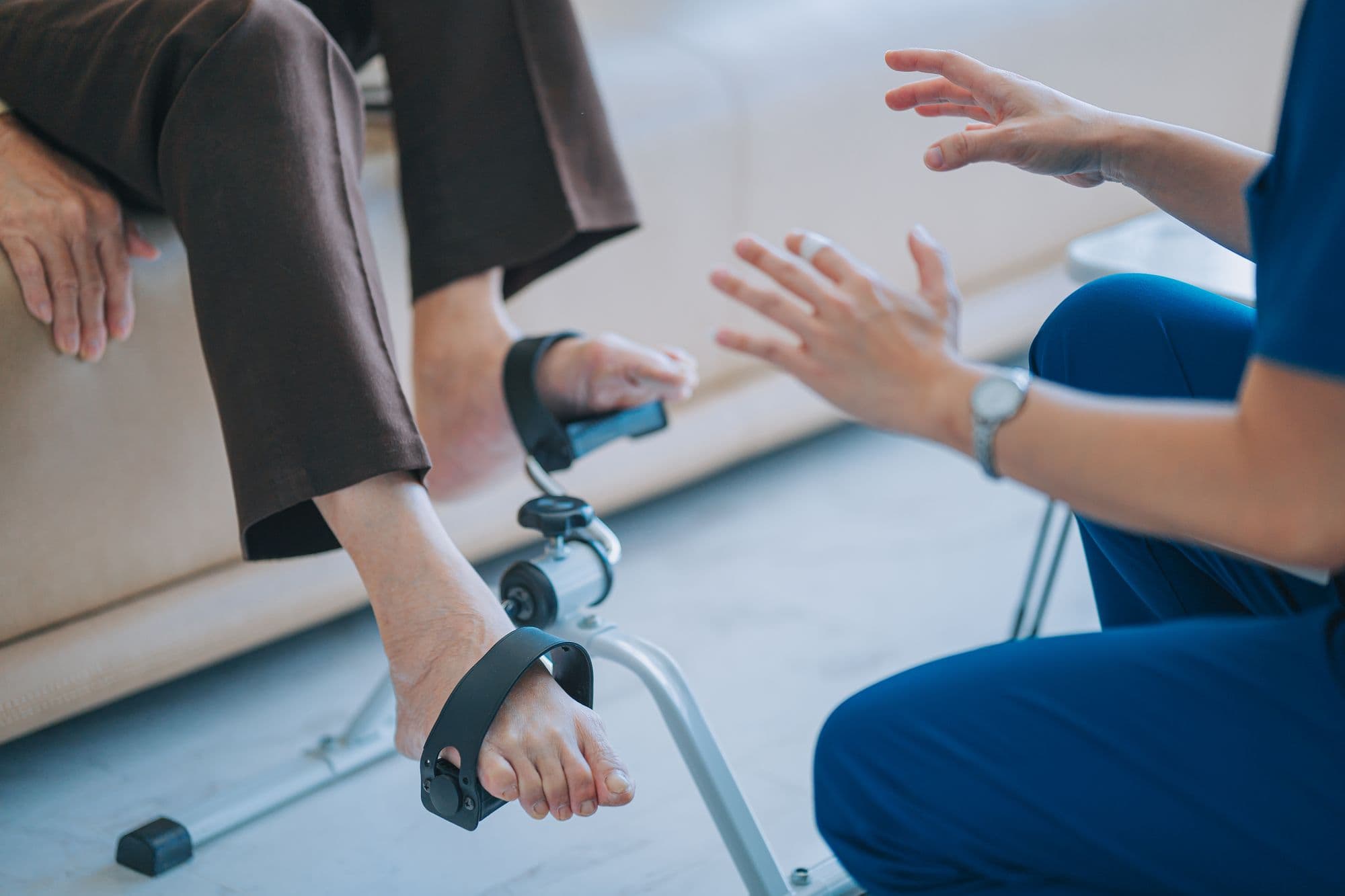
- Ankle pumps: sit back with your heels resting on the floor. Point your toes away from you, then pull them back towards you. Repeat 10 to 15 times. If you are wondering how to get blood flow to your feet while sitting, this is the easiest place to start.
- Ankle circles: lift one foot slightly and draw slow circles with your toes, 10 each way. Then swap feet.
- Toe curls and spreads: curl your toes as if gripping the floor, then spread them wide. Repeat 10 times.
- Seated marching: lift one knee a few inches, lower it, then lift the other. Keep going for about a minute.
- Knee straightening: straighten one knee, hold for a count of three, then lower it slowly. Do 10 on each leg.
Standing exercises
Only try these if you can stand safely. Hold a kitchen worktop or a sturdy chair that will not slide, with both hands. Wear shoes rather than loose slippers, and have someone nearby the first few times if your balance is not steady.
- Calf raises: rise slowly onto your toes, hold for a moment, then lower your heels with control. Start with 5 to 10 and build up over the weeks.
- Toe raises: keep your heels down and lift the front of your feet, then lower them. Repeat 10 times.
- Marching on the spot: lift your knees in turn for 30 seconds to a minute.
If you have diabetes, check your feet every day for cuts, blisters or colour changes, and keep your foot check appointments. If your legs feel achy and tired rather than cold, our article on aching legs and how physiotherapy can help looks at other common causes.
UK Physio Tip: Tie your exercises to things you already do every day. Try ankle pumps while the kettle boils, calf raises at the worktop while the toast is on, and hand movements during the evening news. Linking a movement to a daily habit makes it far easier to remember than setting a time on the clock.
Poor blood circulation in hands: what helps
Poor blood flow to hands often shows up as cold, white or bluish fingers, stiffness or tingling, especially outdoors in winter. Raynaud's is a common reason, but cold hands can also be linked to other health conditions or to some medicines, and long use of vibrating tools can play a part. If your fingers change colour often, or it is affecting daily life, the NHS advises seeing a GP.
Warmth comes first. Put on gloves before you go out, not once your hands are already cold, and avoid sudden changes in temperature. Warm cold hands gradually, under your arms or in lukewarm water, never very hot water. If you have reduced feeling in your hands or feet, take care with hot water bottles and heaters, as you may not notice a burn.
Gentle hand movements keep the fingers moving and help them warm up. Try these a few times a day, seated with your forearms resting on a table:
- Fist and spread: make a loose fist, then open your hand and spread your fingers wide. Repeat 10 times.
- Finger touches: touch your thumb to each fingertip in turn, then work back the other way.
- Wrist circles: circle both wrists slowly, 10 times in each direction.
- Shoulder rolls and arm swings: roll your shoulders backwards 10 times, then let your arms swing gently by your sides.
Stress can trigger Raynaud's attacks for some people, so slow breathing exercises are worth adding to your day. A short walk warms your whole body, which helps your hands as well as your feet.
How a home physiotherapist can help
Many older adults know they should move more but worry about falling or doing the wrong thing. A physiotherapist visiting you at home can watch how you walk and get up from a chair, then build a routine around your own home. Family members can join in and learn how to help between visits.
At FlexAura, we arrange HCPC-registered, DBS-checked physiotherapists to visit you at home. A visit can include:
- an assessment of your strength, balance, walking and feet
- a personal exercise plan for your legs, feet and hands, seated or standing to suit you
- a gradual walking plan, with advice on footwear and walking aids
- falls prevention advice, because feeling steady makes it easier to stay active
- advice on when to go back to your GP if something changes
Every home visit lasts 60 minutes. The first home visit is £110, follow-ups are £99, and a 5-session home package is £450. If you would rather start with advice by video, an online consultation costs £45 and lasts 30 minutes. You pay after the visit, and there are no cancellation fees. We are rated 4.8 on Google. Read more about our physiotherapy for older adults at home, or book a physiotherapist online.
A physiotherapist works alongside your GP. Exercise can help many people with circulation problems stay active, and the cause still needs a medical check. This platform facilitates booking only. It does not provide medical advice.
Book a home physiotherapy visit
Working out how to improve circulation is mostly about small, regular movement that fits your day, along with warmth and a GP check to find the cause. If you or a parent would like help getting started safely, a physiotherapist can visit and set up a routine with you at home. Book Now, call 07782 610 633 or WhatsApp us.
Frequently asked questions
How can I improve my blood circulation quickly?
Get up and walk for a few minutes, or do 15 to 20 ankle pumps and some fist-and-spread hand movements in your chair. Moving your muscles gets blood flowing, and warm layers help cold hands and feet. If cold, numb or painful hands or feet keep coming back, see your GP.
What is the best exercise for circulation in the feet?
Walking is the simplest, because it works the calf muscles that help pump blood back up from the feet. If walking is difficult, ankle pumps, ankle circles and seated marching are good alternatives you can do in a chair.
Is there a treatment for poor circulation in hands and feet?
Treatment depends on the cause, which is why a GP check matters. Peripheral arterial disease, diabetes and Raynaud's are each managed differently. Exercise and keeping warm help many people alongside their GP's advice, but they do not replace a diagnosis.
Is it safe to exercise if I have poor circulation?
Gentle exercise suits most people, but check with your GP first if you have a heart condition, a recent blood clot, a foot ulcer, or have not been active for a while. Stop and get advice if exercise brings on chest pain, dizziness or severe leg pain.
Need Professional Help?
Find a verified, DBS-checked physiotherapist near you and book a home visit or online consultation.
Book Now